Industrial Solutions by Technology
CONNECTIVITY · AUTOMATION · SECURITY
Industrial automation and connectivity solutions by technology
Not every industrial problem needs new hardware. Most operations need the right combination of networking, automation, connectivity, and security, chosen for the environment in which it will actually run, integrated correctly, and backed by engineers who understand what is at stake if it fails.
This page maps that world by technology. If you know the problem but not the solution, start here.
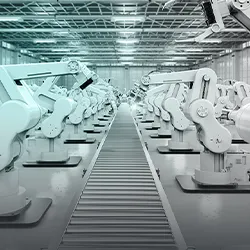
We build for the places where failure is not an option: manufacturing floors that cannot stop, oil and gas sites with no room for error, mining operations that push lesser hardware past its limits, water systems on which a city depends, and the power, automotive, and transportation networks that hold everything else together. These are not catalog picks. They are systems built to match the environment they serve.
DIGITAL TRANSFORMATION
Industrial digital transformation is more than new equipment
Industrial digital transformation is not a hardware refresh. Transformation happens when networking, cybersecurity, automation, edge computing, and IIoT connectivity work as a coherent system, not as isolated upgrades installed in sequence over a decade.
The right technology stack can reduce industrial downtime by catching failure signals before they become outages. It can improve efficiency by making real-time data available to the people and systems that act on it. And it builds the industrial system reliability that Canadian and North American operations actually depend on.
Real-time industrial monitoring, industrial cybersecurity integration, and smart industrial operations are not separate initiatives. They are layers of the same architecture.
TECHNOLOGY LAYERS
How each industrial technology layer fits the architecture
Most industrial operations do not have a single technology problem. They have several running in parallel, often interacting in ways that make root cause analysis genuinely difficult. Understanding what each technology layer is responsible for, and what breaks when it is missing, is where good architecture starts.
Industrial Ethernet and Cybersecurity
The communication backbone of every industrial network, paired with the protection it needs to stay online. Switches, secure routers, wireless access points, and network security appliances that withstand electrical noise, vibration, and extreme temperatures, while defending OT networks against intrusion. Without it, data cannot move reliably, and an unprotected network puts every other layer at risk.
Industrial Automation
The control layer of industrial operations. Sensors, relays, RFID, controllers and I/O, and HMIs that execute process logic and keep production running to specification. When these systems are integrated properly, operators spend less time on routine tasks and more time handling exceptions.
Industrial IoT (IIoT)
The connectivity layer that links field devices to the rest of the organization. Cellular and IoT routers, edge computing gateways, and LoRaWAN gateways collect data from sensors, meters, and remote assets, then send it to the platforms that monitor, analyze, and act on it.
Industrial Edge Connectivity
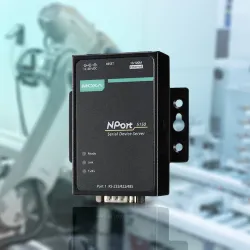
The layer that brings legacy field devices onto modern networks without replacing them. Serial device servers, protocol gateways, and USB-to-serial converters bring RS-232/422/485 equipment, older PLCs, and other serial-only devices onto Ethernet and IP networks cleanly and securely.
Industrial Computing
The processing layer running on the floor itself. x86 and Arm-based industrial computers, panel computers, and system software provide the rugged, always-on compute power that local applications, HMIs, and edge processing depend on.
Industrial Accessories
The supporting hardware every deployment still depends on. Cables, connectors, antennas, power supplies, and enclosures that keep the rest of the architecture running reliably in the field.
Each technology addresses a specific gap. Combined, they form the infrastructure that integrated industrial systems run on.
INDUSTRY 4.0
ManuAuto's Industry 4.0 solutions for Canada and North America
Industry 4.0 solutions are not a single product or platform. They combine operational capabilities built on reliable infrastructure and connected systems.
Smart Operations
Smart manufacturing solutions and predictive maintenance systems rely on continuous data from field assets through reliable IIoT connectivity, edge processing, and stable network architecture.
Connected Infrastructure
Connected factory solutions and industrial IoT applications improve visibility across assets and processes. They require networks that support mixed protocols, legacy devices, and real-time traffic.
Data and Intelligence
Data-driven manufacturing and industrial AI readiness depend on clean, structured, low-latency data. Digital manufacturing infrastructure makes that data reliable for analysis and action.
WHY THE SOURCE MATTERS
Why the source of industrial technology matters
Selecting the right technology matters. Choosing the right partner ensures it performs as expected after installation. As a trusted industrial technology supplier serving Canada and North America, ManuAuto provides engineering expertise for every project.
Engineering-focused recommendations for real application requirements.
Global industrial brands from authorized manufacturers.
Industrial engineering consulting for specification validation.
Industrial sourcing services with reliable distribution across Canada and North America.
Automation system integration support for commissioning and troubleshooting.
Long-term industrial partnership throughout the project lifecycle.
SELECTION GUIDE
Choosing the right industrial technology
Selecting the wrong technology for an industrial environment is an expensive lesson. This industrial technology selection guide walks through the decision in the order it should actually happen.
Define the problem before looking at products
The challenge might be connectivity, control, visibility, security, or a combination. Technology selection follows problem definition, not the other way around.
Assess the environment before assessing the hardware
Temperature range, ingress protection requirements, hazardous area classifications, and communication distances all constrain the options before brand selection begins.
Verify protocol compatibility with existing infrastructure
Choosing industrial networking equipment that cannot communicate with what is already installed creates integration debt. Compatibility must be confirmed at the protocol level before anything is ordered.
Design cybersecurity into the architecture from the start
Industrial cybersecurity best practices require security to be designed in, not retrofitted. Security decisions made late in a project are almost always compromises.
Map the full architecture before selecting individual components
An industrial infrastructure planning guide approach means understanding how every layer interacts before specifying any single piece of hardware. Isolated product decisions without system context are the most common source of integration problems.
Match IIoT hardware to real data requirements
Selecting industrial IoT solutions based on connectivity specs alone misses the point. The value of IIoT data depends on whether the network can carry it, the edge can process it, and the platform can act on it.
The right technology decision is rarely obvious without the right questions in front of it. ManuAuto's engineering team works through this process with every client before a single product is recommended, because a well-scoped project delivers better outcomes than a fast one.
GET STARTED
Know the problem but not the solution?
Start with a conversation, not a catalog. Our engineering team maps your requirements to the right technology layer before recommending a single product.
COMMON QUESTIONS
Industrial solution by technology FAQs
What is the difference between industrial automation and industrial digitalization?
Industrial automation controls processes, while industrial digitalization connects those processes to data systems. Automation improves operations, and digitalization provides visibility and insights. Modern industries need both to achieve efficient, data-driven operations.
Is Industry 4.0 relevant for mid-sized industrial operations or only large enterprises?
Industry 4.0 is relevant for both mid-sized and large industrial operations. Technologies like industrial Ethernet, IIoT connectivity, and edge computing can be scaled gradually. Companies can start by solving key challenges, such as downtime or manual data collection, and expand over time.
When should an industrial operation bring in external engineering support for technology selection?
Industrial operations should bring in external engineering support when projects involve multiple technology layers or specialized requirements. Early support during the specification stage helps prevent costly errors during installation and operation.