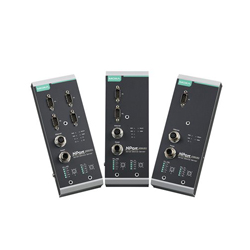
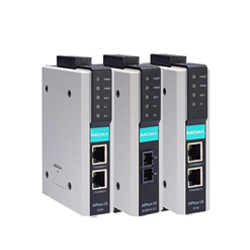
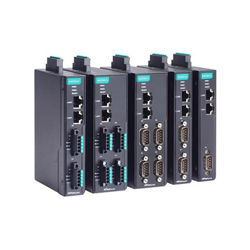
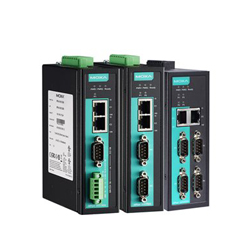
Industrial Device Servers
Moxa Industrial Device Servers Are Built for Environments That Don't Forgive Weak Hardware
Not every serial-to-Ethernet connection happens in a climate-controlled server room. Some happen inside a substation cabinet baking in summer heat, or on a factory floor shaking from heavy machinery a few feet away. Moxa industrial device servers exist for exactly those conditions, hardware that keeps working when standard equipment would already have failed.
This category shows up wherever serial connectivity has to survive real punishment: manufacturing plants, factory automation lines, oil and gas facilities, power and energy infrastructure, railway transportation networks, water and wastewater systems, and mining operations. If the environment is harsh, this is the product line built for it.
The Environments Standard Hardware Can't Handle
Ask any engineer working in these sectors, and they'll tell you the same thing: equipment failure rarely happens because a device couldn't do its job. It happens because the device couldn't survive the conditions it was placed in. Vibration loosens connections. Temperature swings stress components. Electrical noise corrupts signals that were fine a moment ago.
Standard commercial-grade device servers weren't built with any of that in mind. They're designed for offices, not oil fields. When that mismatch shows up in a live deployment, the result is downtime, unreliable data, and a maintenance team chasing intermittent failures that shouldn't be happening in the first place.
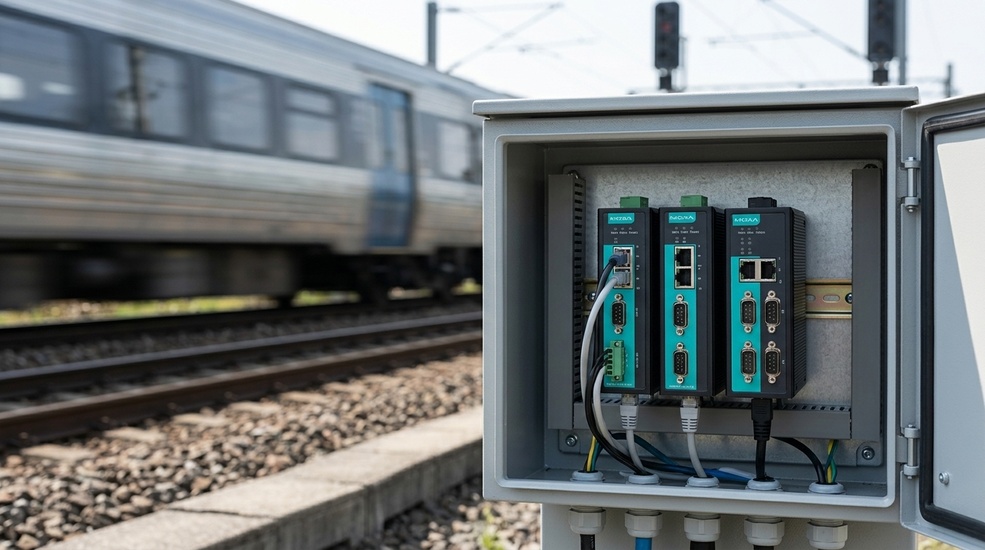
How Moxa Industrial Device Servers Solve This
Moxa's industrial device server line was built specifically to close this gap. At the core, these units deliver the same industrial device connectivity and serial-to-Ethernet connectivity found across Moxa's broader lineup, but hardened for conditions that would compromise standard hardware: wide operating temperature ranges, surge protection on serial, LAN, and power lines, and industrial certifications like ATEX, Class I Division 2, and IECEx depending on the series.
That means you can connect industrial devices to Ethernet in a substation, a mine, or a rail corridor with the same confidence you'd have in a controlled facility. Legacy equipment connectivity stays intact even as the surrounding environment gets harsher, and remote industrial device access becomes possible in locations that used to require an on-site visit just to check status. The result is industrial network integration that holds up under pressure, not just on paper.
Moxa Industrial Device Server Series at a Glance
Reliability under stress isn't a marketing claim here; it's the design philosophy behind this product line. Each series targets a specific combination of environmental demands and connectivity needs, so picking the right one usually comes down to matching your site's real stressors, temperature, vibration, moisture, or electrical noise, to the series built to handle them.
These four series are a starting point, not the full lineup; a specialist can confirm the exact model and port count once we know your site conditions.
Find the Right Moxa Industrial Device Server for Your Site
Matching the right industrial device server to your environment isn't guesswork when you have the right team behind you. As a Moxa industrial device server distributor in Canada, we help facilities confirm compatibility with existing equipment before committing to an order, so the hardware chosen is the hardware that actually holds up on-site.
Common Questions About Moxa Industrial Device Servers
1. What is a Moxa industrial device server?
It's a ruggedized version of Moxa's serial device server line, built to connect serial devices to Ethernet networks while withstanding harsh temperatures, vibration, and electrical interference.
2. What is an industrial device server?
It's hardware designed to bridge serial equipment with Ethernet networks in demanding environments, unlike standard device servers built for controlled, office-like conditions.
3. How does a Moxa industrial device server work?
It receives data through serial ports like RS-232, RS-422, or RS-485, converts that data, and transmits it over an Ethernet or industrial Ethernet connection to the rest of the network.
4. What is the difference between a serial device server and an industrial device server?
An industrial device server is built with ruggedized components for harsh environments, while a standard serial device server is typically suited to more controlled, indoor conditions.
5. Which Moxa industrial device server should I choose?
The right choice depends on your port count, environmental exposure, and existing protocols. A quick conversation with our team can confirm the best fit before you order.
6. Can Moxa industrial device servers connect to PLC and SCADA systems?
Yes. They're commonly used to bring serial-based PLCs and field devices into Ethernet-connected SCADA platforms for centralized monitoring, even in harsh installation environments.
7. What interfaces do Moxa industrial device servers support?
Most models support RS-232, RS-422, and RS-485, with variations by series depending on port count and connector type.