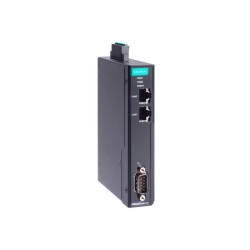
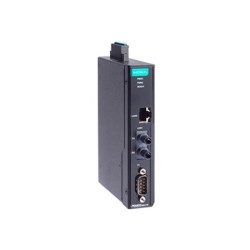
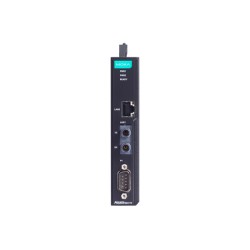
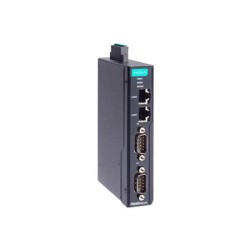
How Much Risk Is Hiding in Your OT Network? Meet Moxa MGate G2

What Is an MGate (Protocol Gateway)?
MGate protocol gateways
provide protocol translation between industrial devices operating on different
communication standards. This helps improve interoperability while supporting more efficient data exchange
within SCADA and OT environments. The latest
MGate MB3x70-G2 Series
further improves communication performance
using Agent Mode Active Polling: Agent mode polls operational data in the
background and serves cached information directly to SCADA systems, helping minimize latency compared
with transparent gateway operation. and supports the integration of nonstandard serial
equipment into Ethernet networks through built-in
proprietary serialNo PLC Programming: Proprietary serial support simplifies
integration by allowing custom serial equipment to connect to Ethernet networks without changing PLC
programs. functionality.
Active Polling: Agent mode polls operational data in the
background and serves cached information directly to SCADA systems, helping minimize latency compared
with transparent gateway operation. and supports the integration of nonstandard serial
equipment into Ethernet networks through built-in
proprietary serialNo PLC Programming: Proprietary serial support simplifies
integration by allowing custom serial equipment to connect to Ethernet networks without changing PLC
programs. functionality.
 Field Device (Protocol A)
  Serial
  MGate Ethernet
  SCADA / HMI (Protocol B)
 This illustration shows how the MGate Series serves as a reliable link between serial field devices and Ethernet-based SCADA or HMI systems. By translating Protocol A used by field equipment into Protocol B required by supervisory platforms, the gateway enables stable, low-latency communication throughout industrial networks. This approach allows engineers and system integrators to connect a wide range of assets without making changes to existing PLC programs, helping improve operational efficiency while enhancing network interoperability.


The MGate product family offers a comprehensive portfolio of industrial connectivity solutions designed for engineers and system integrators. Whether the goal is to connect serial devices to Ethernet networks, enable seamless communication between different industrial protocols, or integrate USB-based equipment, MGate gateways simplify system integration, improve network reliability, and streamline data exchange across industrial automation environments. The portfolio includes serial device servers for Ethernet connectivity, MGate G2 protocol gateways for secure and efficient protocol conversion, and USB-to-serial converters that provide flexible support for a wide variety of devices.
Why Choose the MGate G2?
The MGate G2 Series is designed to provide secure protocol conversion, operational visibility, and simplified management for modern industrial networks.
-

-

-

-
*DNV certification is pending approval. Check the datasheet for updates.

A Long-term Commitment to Your Edge
Long product lifecycle support is important for industrial operators managing critical infrastructure over extended deployment periods. Built on Moxa’s self-developed ASIC, the MGate G2 Series helps reduce supply-chain dependency while supporting stable product availability for long-term industrial network planning.
Discover Moxa Promise →Migration Path: From G1 to G2
Not sure which G2 unit replaces your current MGate MB3170, MB3270, or MB3470? The table below maps every G1 model to its G2 counterpart, calling out any changes in port count, connector style, or fiber option along the way.
| No. of Ports | G1 Model | G2 Successor Model | Note |
|---|---|---|---|
| 1 Serial Port | MGate MB3170 | MGate MB3170-G2 | |
| MGate MB3170-T | MGate MB3170-G2-T | ||
| MGate MB3170I | MGate MB3170I-G2 | ||
| MGate MB3170I-T | MGate MB3170I-G2-T | ||
| MGate MB3170-S-SC | MGate MB3170-S-SC-G2 | ||
| MGate MB3170-S-SC-T | MGate MB3170-S-SC-G2-T | ||
| MGate MB3170I-S-SC | |||
| MGate MB3170I-S-SC-T | |||
| MGate MB3170-M-SC | MGate MB3170-M-SC-G2 | ||
| MGate MB3170-M-SC-T | MGate MB3170-M-SC-G2-T | ||
| MGate MB3170I-M-SC | |||
| MGate MB3170I-M-SC-T | |||
| MGate MB3170-M-ST | MGate MB3170-M-ST-G2 | ||
| MGate MB3170-M-ST-T | MGate MB3170-M-ST-G2-T | ||
| 1 Serial Port | N/A | NEW: MGate MB3170-SFP-G2 | Fully supports the Moxa 1-port Fast Ethernet SFP module SFP-1FE Series: -SFP-1FEMLC-T: multi-mode, LC connector -SFP-1FESLC-T: single-mode, LC connector -SFP-1FELLC-T: single-mode, LC connector |
| N/A | NEW: MGate MB3170-SFP-G2-T | ||
| 2 Serial Port | MGate MB3270 | MGate MB3270-G2 | In addition to the DB9 serial connector for the serial port, support for a terminal block serial connector (-TB) has now been added. |
| NEW: MGate MB3270-TB-G2 | |||
| MGate MB3270-T | MGate MB3270-G2-T | ||
| NEW: MGate MB3270-TB-G2-T | |||
| MGate MB3270I | MGate MB3270I-G2 | ||
| NEW: MGate MB3270I-TB-G2 | |||
| MGate MB3270I-T | MGate MB3270I-G2-T | ||
| NEW: MGate MB3270I-TB-G2-T | |||
| 4 Serial Port | N/A | NEW: MGate MB3470-G2 | |
| NEW: MGate MB3470-TB-G2 | |||
| NEW: MGate MB3470-G2-T | |||
| NEW: MGate MB3470-TB-G2-T | |||
| NEW: MGate MB3470I-G2 | |||
| NEW: MGate MB3470I-TB-G2 | |||
| NEW: MGate MB3470I-G2-T | |||
| NEW: MGate MB3470I-TB-G2-T |
Rethinking the Connector Layout
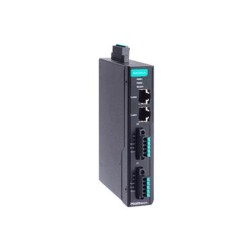
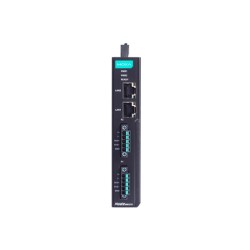
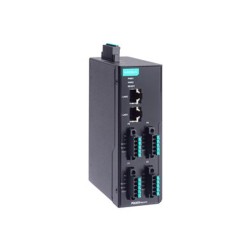
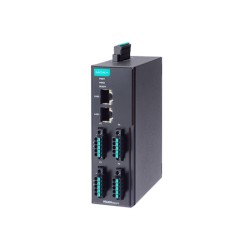
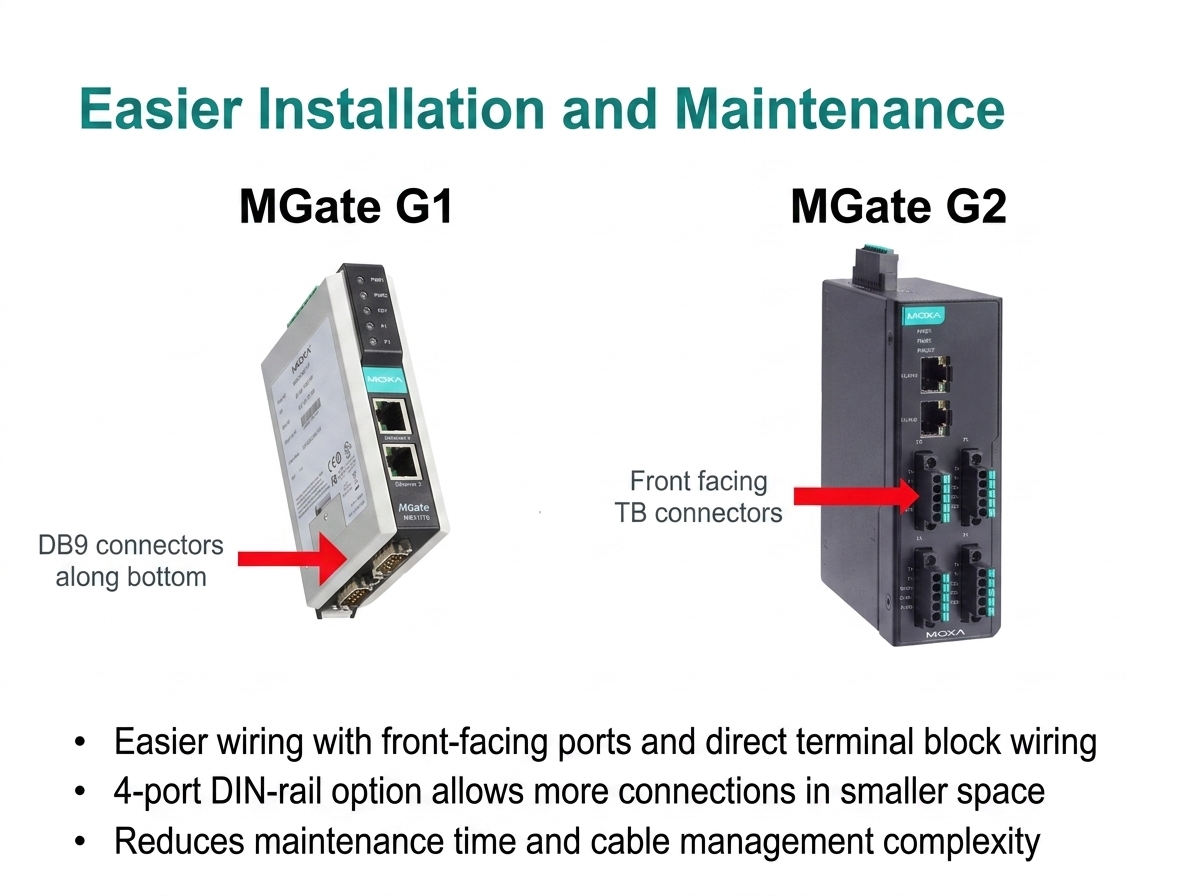
A lot of the day-to-day friction with older gateways isn’t about performance; it’s about the cabinet. G1 units route their DB9 serial connectors along the bottom edge, which usually means awkward cable runs and less room to work once the unit is mounted. G2 moves the serial connections to the front face as terminal blocks, so wiring, testing, and swapping a cable no longer require pulling the unit off the rail.
- Front-facing terminal blocks make wiring and cable checks accessible without dismounting the unit
- A 4-port DIN-rail model packs more connections into the same panel space
- Less time spent on cable management translates into shorter maintenance windows
One Interface Your Team Already Knows
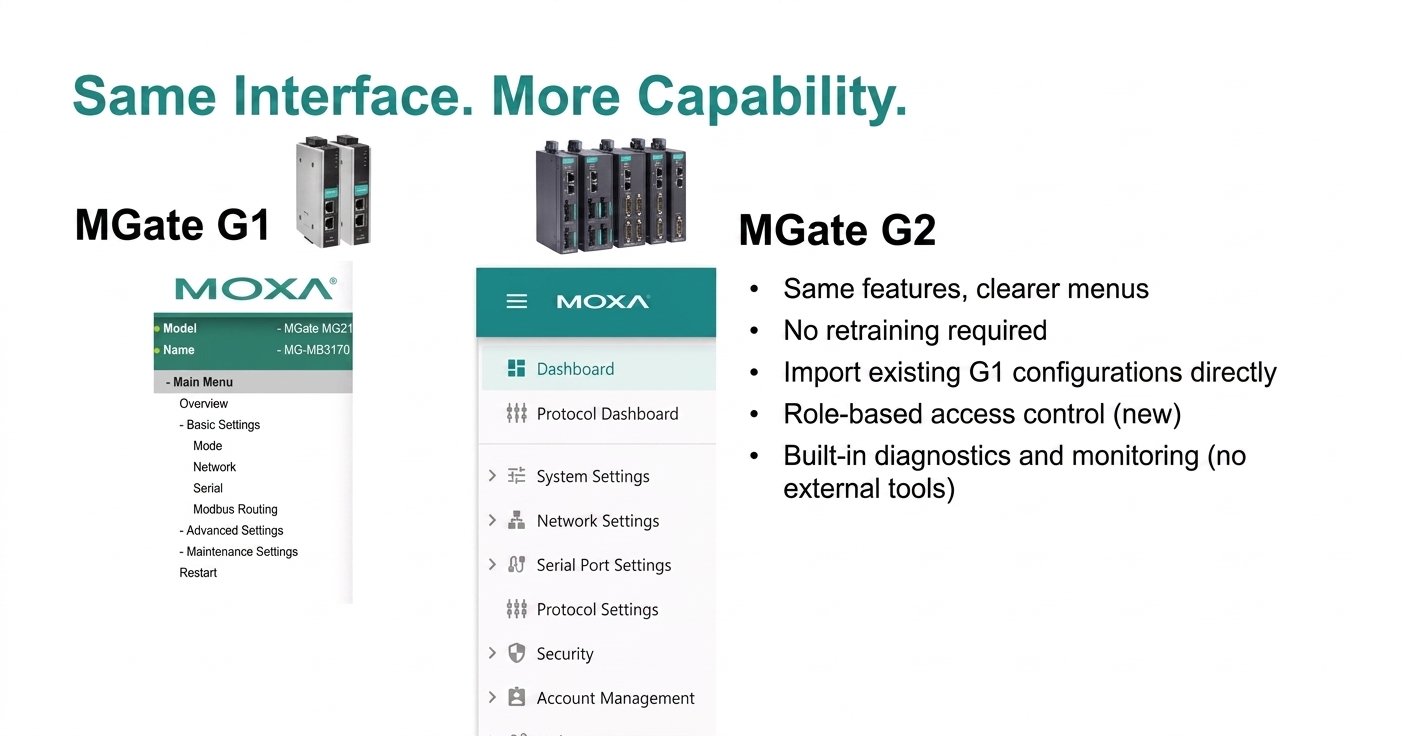
Retraining is often the hidden cost of a hardware refresh. G2 avoids that by keeping the same menu logic engineers already use on G1, just reorganized into clearer top-level sections, covering the dashboard, protocol status, network and serial settings, security, account management, and diagnostics. Existing G1 setup files can be pulled straight into a new G2 unit, so migrating a device doesn’t mean reconfiguring it from scratch.
- Familiar workflow, reorganized into a cleaner menu structure
- Field teams can start using it without a training cycle
- G1 configuration files import directly, cutting setup time
- New: role-based permissions let you limit what each login can change
- Built-in diagnostics remove the need for a separate monitoring utility
Weighing the Upgrade
- G1 hardware is on an older platform that’s approaching end of life
- G2 brings current-generation components and stronger baseline security
- Typical street pricing lands at or below what G1 costs today
- Because the interface carries over, there’s no re-certification or training overhead for your team
Spec-by-Spec: What Actually Changed
The table below breaks down where G2 diverges from G1 across hardware, protocol support, EMC rating, security posture, network design, and diagnostics.
| Category | MGate G1 | MGate G2 |
|---|---|---|
| Hardware |
1 or 2 serial ports, DB9 only Single-port terminal block Fiber: M-SC, M-ST, S-SC |
1, 2, or 4 serial ports DB9 or terminal block, depending on model Fiber: M-SC, M-ST, S-SC, plus SFP |
| Protocol handling |
Transparent conversion only Standard Modbus TCP ↔ RTU/ASCII |
Transparent or Agent (cache-and-poll) mode Adds proprietary-serial and TCP conversion |
| EMC rating | Commercial-grade (EN 55032 / EN 55035) | Industrial-grade (EN 61000-6-2 / EN 61000-6-4) |
| Cybersecurity |
Password login Basic encryption No secure boot Basic event logging |
Role-based permissions HTTPS (TLS 1.2) Hardware-rooted secure boot Centralized monitoring & alerts IEC 62443-4-2 SL2 compliant |
| Network topology | Single subnet only | Single subnet, or dual-subnet segmentation |
| Troubleshooting | External Windows utility for traffic monitoring | On-device traffic monitor, protocol diagnostics, Modbus test simulator, fiber diagnostics, serial port monitor, MXview One integration |
The MGate G2 Series in Action


Where MGate G2 Gets Used
- Oil & gas sites: linking serial flow meters and RTUs into a central SCADA network where ATEX/IECEx ratings are required
- Substations: bridging serial protection relays with Modbus- or EtherNet/IP-based monitoring platforms
- Water treatment plants: bringing older serial PLCs and meters onto an Ethernet backbone without touching the control logic
- Mixed-vendor production lines: unifying PLCs and drives that speak different protocols (PROFINET, EtherNet/IP) onto one network
Explore Second-Generation MGate Solutions
 HTTPS/SSH
Encryption
HTTPS/SSH
Encryption  Agent Mode
 Proprietary
Serial Support
Proprietary
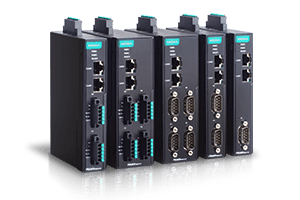
Serial Support MGate MB3170/3270/3470-G2 Series
High-performance Modbus gateways with agent mode and advanced security features. Streamline SCADA integration while safeguarding your OT data from cyber threats.
*DNV certification pending. See the datasheet for the latest status.
MGate 5192 Series
1-port gateways supporting IEC 61850-to-DNP3, IEC 101/104, and Modbus. Perfect for modernizing power substations.
View Details →MGate 5121 Series
1-port Modbus RTU/ASCII/TCP-to-BACnet/IP gateways. Bridges industrial automation devices to building automation systems.
View Details →MGate 5122 Series
1-port Modbus RTU/ASCII/TCP-to-EtherNet/IP gateways. Connects Modbus devices directly to Rockwell PLCs.
View Details →MGate 5123 Series
1-port Modbus RTU/ASCII/TCP-to-PROFINET gateways. Enables smooth integration into Siemens PROFINET networks.
View Details →MGate 5134 Series
2-port serial-to-Ethernet Modbus gateways for PROFINET. Ideal for high-density PLC connectivity.
View Details →MGate 5135/5435 Series
1- and 4-port Modbus RTU/ASCII/TCP-to-EtherNet/IP gateways. Connects Modbus field devices to EtherNet/IP networks efficiently.
View Details →Common Questions About the Upgrade
1. What actually changes when you move from G1 to G2?
The core function, Modbus protocol conversion, stays the same, but G2 adds Agent mode for lower-latency polling, a stronger security baseline (encryption, secure boot, IEC 62443-4-2 SL2), and considerably more built-in diagnostic tooling.
2. Will switching to G2 force us to rewrite PLC logic?
No. G2’s proprietary-serial support lets non-standard serial devices talk to the Ethernet side without any change to existing PLC programs.
3. Can we reuse our current G1 device settings?
Yes, G2 accepts a direct import of a G1 configuration file, so a swap doesn’t mean rebuilding the setup from zero.
4. Does G2 meet current industrial cybersecurity standards?
Yes. It’s built to IEC 62443-4-2 at Security Level 2 (SL2), which is the bar most OT security policies now expect from edge devices.
5. Which model fits a power substation running IEC 61850?
That’s outside the MB3x70-G2 line, the MGate 5192 series handles IEC 61850 to DNP3, IEC 101/104, and Modbus conversion and is the better fit for substation work.
6. How do I configure and set up the MGate MB3170?
Configuration is done through Auto Device Routing or the embedded web console, using the configuration utilities, wiring diagram, and firmware Moxa provides through its official support resources.
7. Where is the MGate MB3170 used?
Common applications include marine, oil and gas, and factory automation, wherever a serial Modbus device needs to join an Ethernet-based control system.
8. Does the MGate MB3170 support industrial temperatures?
Yes, it operates reliably from 0 to 60°C. A wide-temperature variant (-40 to 75°C) is also available in the broader MGate MB3170 series.
9. Is the MGate MB3170 available in Canada, and does ManuAuto offer support?
Yes. The MGate MB3170 is available through our distribution network across Canada and North America, and our team provides technical support and product guidance for Moxa gateways.
Serial infrastructure doesn’t need to be replaced to be brought up to current standards, it needs a device server that can sit between it and a modern, audited network. That’s the case for NPort G2: it protects the investment already made in serial field equipment while closing the security and visibility gaps that older device servers weren’t built to handle. Talk to the ManuAuto technical team about picking the right model or working through your G1-to-G2 migration map.
Related Products