Device Hardening for Industrial Networks: How Moxa's Secure-by-Design Approach Reduces OT Vulnerabilities

Why Device Hardening Matters
A secure OT network starts with a strong architecture. Network segmentation, traffic control, and access management help contain cyber threats across industrial environments. However, even the best-designed network can be exposed if individual devices are not properly secured.
Device hardening addresses this challenge by embedding security directly into device design and functionality. This reduces the risk of vulnerabilities being exploited throughout the device lifecycle. Moxa follows a Secure-by-Design development approach that introduces cybersecurity from the earliest design stages. Every device is supported by built-in protection mechanisms and continuous vulnerability management to strengthen long-term security.
Security Engineered Into Every Moxa Device
Secure-by-Design Development
Cybersecurity Standards Alignment
Vulnerability Management
Secure-by-Design Development
-
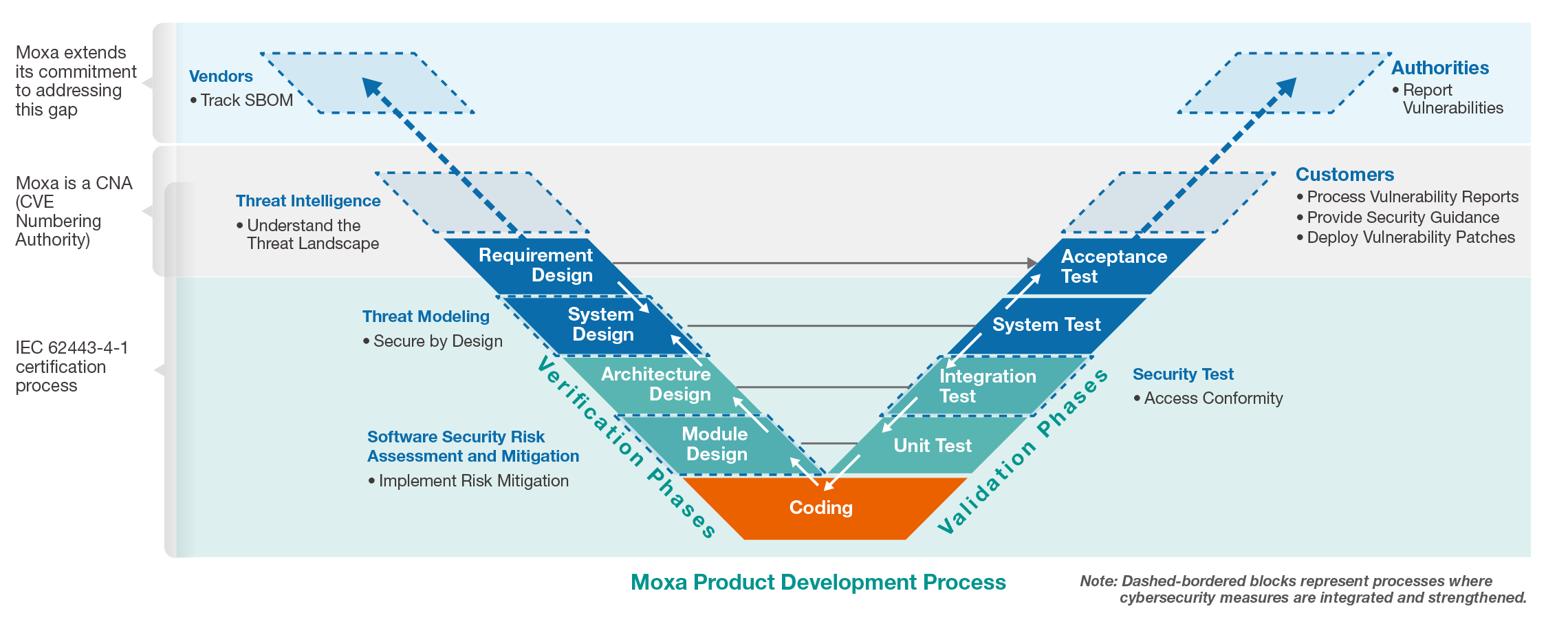
Strong security begins long before a product reaches the field. Moxa applies a Secure-by-Design methodology that integrates cybersecurity throughout the entire product development lifecycle. The goal is simple: identify and reduce vulnerabilities before deployment.
Key practices include:
- Threat modeling during system architecture design
- Secure coding standards and development guidelines
- Security requirements integrated into product validation
- Security testing and vulnerability scanning
-
This development approach allows Moxa devices to include essential security features from the start.
Industrial Cybersecurity Standards Alignment
How can organizations ensure their industrial devices meet recognized cybersecurity requirements?
Moxa aligns its networking and connectivity solutions with internationally recognized industrial cybersecurity standards. This helps customers deploy devices that meet trusted security requirements and support regulatory compliance across industrial environments.
These include:
- IEC 62443-4-1 Secure Development Lifecycle certification
- IEC 62443-4-2 Security capabilities for industrial automation devices
EU Cyber Resilience Act (CRA) and RED-DA cybersecurity requirements
- JC-STAR certification for cybersecurity compliance in Japan
Moxa was among the first companies worldwide to achieve IEC 62443-4-1 certification for its Secure Development Lifecycle. Several product families have also achieved IEC 62443-4-2 certification. These certifications demonstrate Moxa's commitment to delivering secure, reliable, and trusted networking and connectivity solutions for industrial applications around the world. Contact Moxa to learn more about the certified product series.

Cybersecurity Vulnerability Management
Why is continuous vulnerability management critical for industrial cybersecurity?
Cyber threats continue to evolve. Protecting industrial devices, therefore, requires more than secure product development. Continuous vulnerability management helps maintain device security throughout its operational life.
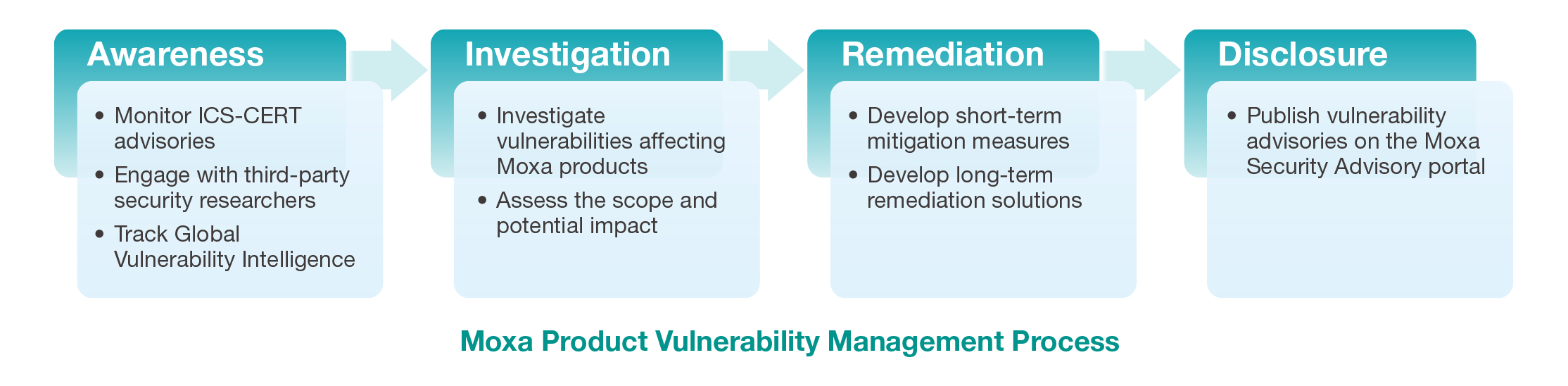
Moxa operates a dedicated Product Security Incident Response Team (PSIRT) that manages vulnerabilities through a structured and transparent process.
The PSIRT process includes:
- Monitoring security alerts and vulnerability reports
- Investigating potential impacts on affected products
- Developing mitigation guidance and firmware updates when available
- Publishing security advisories and remediation recommendations
This structured process enables organizations to respond quickly to emerging threats while maintaining secure and resilient industrial networks.
Related Products