Modbus TCP Gateways
Moxa Modbus TCP Gateways for Legacy-to-Ethernet Integration
Modbus has been around for decades, and plenty of it is still running on serial connections that were never built for modern Ethernet networks. That's the gap Moxa Modbus TCP Gateways close, providing edge connectivity by translating Modbus RTU and ASCII communication into Modbus TCP so legacy devices can join a modern industrial network without replacement.
These gateways show up across manufacturing, oil and gas, water and wastewater, energy, power utilities, building automation, transportation, mining, and marine environments. Wherever older Modbus equipment needs to talk to newer Ethernet-based systems, a Moxa Modbus Gateway is usually part of the answer.

Common Challenges with Modbus Device Communication
Serial Modbus devices weren't designed with Ethernet in mind, and that creates real friction as facilities modernize. A PLC running Modbus RTU can't simply plug into a TCP/IP network, and forcing that connection without the right hardware usually leads to dropped data or unreliable communication.
An industrial Modbus TCP gateway solves this by sitting between the two systems and handling the translation automatically. This approach addresses several recurring problems at once:
- Legacy Modbus RTU or ASCII devices with no direct Ethernet connectivity
- Inconsistent or unreliable data transmission between serial and TCP networks
- Limited visibility into older equipment from modern SCADA platforms
- Difficulty scaling Modbus networks as facilities add more devices
- Security gaps in unmonitored serial-to-Ethernet connections
Modbus Technologies Moxa Gateways Support
Modbus remains one of the most widely used protocols in industrial automation, which is exactly why gateway support for it matters so much. A Moxa Modbus communication gateway allows PLCs, SCADA systems, and HMIs built on different generations of hardware to exchange data without custom integration work, keeping functional legacy devices in service instead of forcing a replacement.
Moxa Modbus TCP Gateways support the full range of Modbus communication, along with the underlying network technologies that make it work:
- Modbus TCP: The Ethernet-based version of Modbus, used for modern PLC and SCADA integration
- Modbus RTU: A serial protocol still common in legacy industrial devices
- Modbus ASCII: An older serial variant used in some specialized industrial applications
- Ethernet: The network backbone that carries Modbus TCP traffic reliably across a facility
- Serial Communication: The physical connection method for RTU and ASCII devices before conversion
Each of these plays a specific role. Serial-based Modbus RTU and ASCII devices connect into the gateway, which then converts that data into Modbus TCP for transmission over standard Ethernet infrastructure
Where Moxa Modbus TCP Gateways Get Put to Work
Facilities rely on Modbus TCP gateways for a range of connectivity needs across their networks. Most projects involve more than one of these use cases at once, since Modbus devices rarely operate in isolation from the rest of a facility's control systems.
- Modbus TCP integration: bringing serial Modbus devices onto an Ethernet-based network
- PLC connectivity: linking controllers that run different Modbus variants
- SCADA integration: feeding Modbus device data into a SCADA platform without custom middleware
- HMI connectivity: giving operator interfaces direct access to serial device data
- Legacy device integration: keeping older Modbus RTU/ASCII equipment in service
- Remote monitoring: reaching distributed Modbus equipment across a site or region
- Industrial data collection: gathering Modbus data for reporting, analysis, and compliance
- Equipment integration: connecting new and existing devices without disrupting operations
- Centralized monitoring: consolidating Modbus data into a single operational dashboard
- Industrial automation systems: supporting broader automation projects that depend on Modbus data
Whether the goal is bringing a single legacy device online or connecting an entire facility's worth of Modbus equipment to a central SCADA platform, the underlying need stays the same: reliable, uninterrupted data exchange. That consistency is what makes Moxa Modbus TCP Gateways a practical fit across such a wide range of industrial applications.
A Few Highlights From the Moxa Modbus TCP Gateway Lineup
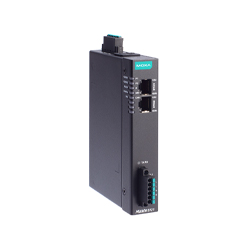
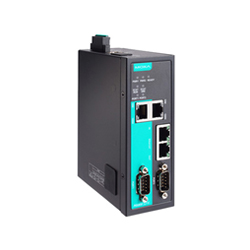
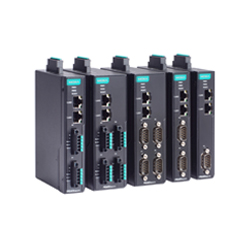
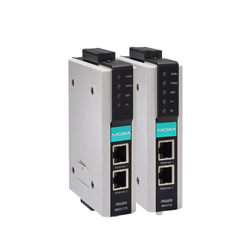
This category covers a wide range of models, each built for a specific combination of ports, protocols, and environmental demands. A few worth knowing:
These four series are just a glimpse into the full Moxa Modbus TCP Gateway lineup. Each model is suited to a different combination of device count, environment, and network complexity.
Looking for the Right Moxa Modbus TCP Gateway?
Choosing the right MGate Modbus gateway depends on your existing devices, port requirements, and network environment. Not every Modbus network looks the same. Some facilities need to connect a handful of serial devices to a single SCADA platform, while others are managing dozens of legacy PLCs across multiple sites with different port and protocol requirements.
ManuAuto works with facilities across Canada and North America to identify the right Moxa Modbus Gateway for their specific setup, whether that means a compact single-port model or a higher-density series built for larger networks. As a trusted Moxa distributor, we help confirm compatibility before any equipment is ordered, so the integration goes smoothly the first time.
Explore Other Protocol Gateway Categories
Need to bridge a different combination of standards? Moxa's protocol gateway lineup covers more than Modbus:
- Protocol Gateways — the full category overview
- EtherNet/IP Gateways — for Rockwell/Allen-Bradley control systems
- PROFINET Gateways — for Siemens-based automation environments
- Fieldbus Gateways — for bridging legacy fieldbus devices into Ethernet networks
Common Questions About Moxa Modbus TCP Gateways
What is a Moxa Modbus TCP gateway?
A Moxa Modbus TCP gateway converts Modbus RTU or ASCII serial
communication into Modbus TCP for use on Ethernet networks. This allows legacy Modbus devices to
connect with modern PLC and SCADA systems.
What is the difference between Modbus TCP and Modbus RTU?
Modbus TCP runs over Ethernet networks, while Modbus RTU uses serial
connections between devices. A Modbus TCP protocol gateway bridges the two so serial devices can
join an Ethernet-based network.
What's the difference between a Modbus TCP gateway and a multi-protocol gateway?
A Modbus TCP gateway converts specifically between Modbus RTU/ASCII
and Modbus TCP. A multi-protocol gateway bridges Modbus with other standards entirely, such as
EtherNet/IP or PROFINET, for facilities that need to connect Modbus devices into a non-Modbus
control system.
When should I use a Moxa Modbus TCP gateway?
Use one when legacy Modbus RTU or ASCII devices need to communicate
with a modern, Ethernet-based control system. It's also useful when scaling a network that mixes
serial and TCP-based equipment.
How do I choose the right Moxa Modbus TCP gateway?
Start with your device count, port requirements, and environmental
conditions, then match those to a gateway series built for that scale. A specialist can confirm
compatibility with your existing PLC or SCADA setup.
Can Moxa Modbus TCP gateways connect legacy serial devices?
Yes. These gateways are built specifically to bridge Modbus RTU and
ASCII serial devices with modern Ethernet-based Modbus TCP networks. This keeps older equipment in
service without a full hardware replacement.
Where can I get support for Moxa Modbus TCP gateways in Canada?
Support and product guidance are available directly through our team, serving facilities across Canada and North America. Reach out to discuss your specific Modbus network requirements.