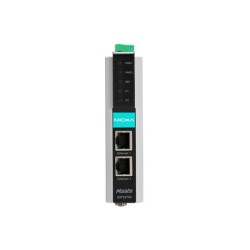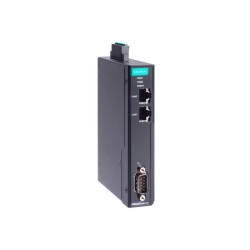
The protocol question rarely comes up during the design phase. It comes up when something stops working, or when someone decides to modernize a system that was never meant to be modernized. A new SCADA platform that cannot talk to a 15-year-old RTU. A cloud analytics initiative stalled because field devices speak Modbus RTU while the data pipeline expects OPC UA. A factory expansion where the new automation cell runs PROFINET and the rest of the floor runs EtherNet/IP.
These are not edge cases. They are the daily reality of managing industrial communication protocols in a live OT environment. This guide is not about explaining what protocols are in the abstract. It is about helping engineers make better decisions about them: which to use, when to integrate, and how to bridge what already exists with what needs to exist.
What Are Industrial Communication Protocols and Why Do They Matter
Industrial communication protocols define how devices exchange data across an OT network, including the format, timing, error handling, and addressing structure of every message. Unlike IT networks, where TCP/IP dominates uniformly, OT networks run a diverse mix of protocols reflecting decades of vendor-specific development, evolving standards, and installed equipment that was never designed for interoperability.
The transition to Ethernet marked a major turning point with the introduction of EtherNet/IP, PROFINET, and Modbus TCP. Industrial communication gained the speed, standardization, and flexibility of IT networks. Ethernet-based protocols enable real-time data sharing among PLCs, sensors, and enterprise systems, enabling predictive maintenance and data-driven decision-making.
Understanding protocol differences is not academic. Every integration decision, whether selecting a gateway, specifying a switch, or designing a SCADA architecture, depends on knowing which protocols are in play, what they can do, and where they fall short.
From the simplicity of Modbus RTU to the real-time precision of the PROFINET industrial network standard to the platform-independent security of OPC UA, the table below maps the protocol landscape that defines modern OT communication:
| Protocol | Type | Speed | Primary Use | Security Built In |
|---|---|---|---|---|
| Modbus RTU | Serial fieldbus | Up to 115 kbps | Legacy PLCs, sensors, meters | No |
| Modbus TCP | Ethernet | 100 Mbps+ | SCADA, HMI, modern PLCs | No |
| PROFIBUS | Serial fieldbus | Up to 12 Mbps | Process and factory automation | Limited |
| PROFINET | Ethernet | 100 Mbps+ | Factory automation, motion control | Limited |
| EtherNet/IP | Ethernet | 100 Mbps+ | Discrete manufacturing, robotics | Limited |
| OPC UA | Ethernet | Variable | IT/OT integration, IIoT, cloud | Yes, by design |
| DNP3 | Serial/Ethernet | Variable | Utilities, water, oil and gas | Limited |
Why do so many different industrial communication protocols exist?
Industrial communication protocols were developed over decades, often driven by specific vendor ecosystems, industry requirements, and the technology available at the time. Modbus was designed in 1979 for simple serial communication. PROFIBUS emerged in the late 1980s for process automation.
PROFINET and EtherNet/IP followed as Ethernet became viable in industrial environments. Each protocol solved the problem it was designed for, and the installed base of each is now enormous. The result is an OT landscape in which multiple protocols coexist within the same facility, often in the same control cabinet. That coexistence is managed through serial-to-Ethernet integration, protocol gateways, and OPC UA servers, not by replacing everything with a single standard.
The Protocols That Define Most OT Environments
Modbus RTU and Modbus TCP
Introduced in 1979, Modbus was never designed to become the world's most widely deployed industrial protocol. It became one anyway, because it was simple, open, and vendor-neutral at a time when most competitors were proprietary. Modbus RTU runs over RS-232 or RS-485 serial links. Modbus TCP wraps the same frame structure inside TCP/IP. The protocol logic is identical; only the transport layer changes.
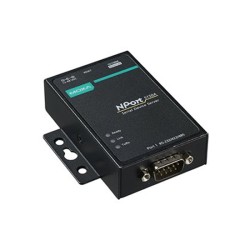
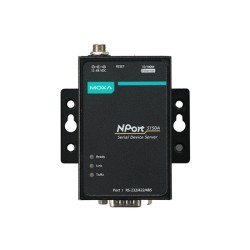
The practical implication for OT engineers is significant. A Modbus TCP and Modbus RTU integration requires no protocol translation, only transport conversion. A serial device server handles that conversion without touching the application logic on either side. Modbus consistently delivers among the lowest latency figures of any commonly deployed industrial protocol, which is why it remains the default choice for simple, time-sensitive field-level communication even in modern deployments.
For a broader view of how protocol choice fits into overall network design, our Complete Guide to Industrial Network Architecture in OT Systems walks through the full Purdue Model context.
PROFINET in OT Networks
Every automation engineer specifying a motion control network eventually reaches the same question: can standard Ethernet deliver the timing precision the application requires? For most factory automation environments, the answer is the PROFINET industrial network standard. Its three communication classes serve three distinct operational requirements:
- Standard TCP/IP for device configuration and diagnostics.
- RT for cycle times as low as 1 millisecond.
- IRT for motion control applications requiring jitter below 1 microsecond.
Specifying the wrong PROFINET class for a motion control application is one of the more common, and more expensive, commissioning errors in factory automation. PROFINET's dominance in European manufacturing and its rapid growth in North American markets mean that most new automation equipment from major vendors ships with PROFINET support by default. The integration challenge is rarely PROFINET-to-PROFINET. It is PROFINET-to-everything-else already running on the floor.
OPC UA for IT/OT Integration
OPC UA is designed for industrial interoperability and is standardized as IEC 62541. It is platform-independent, carries both raw data and semantic context, and includes built-in security features such as encryption and authentication.
A major strength of OPC UA is its role in the integration layer rather than field-level control. It becomes especially relevant when data from different industrial protocols needs to be unified and shared across higher-level systems, including SCADA systems, MES platforms, historian databases, and cloud or IIoT analytics platforms.
When combined with TSN, OPC UA further supports cross-vendor interoperability and modern Industry 4.0 architectures, acting as a structured bridge between OT systems and enterprise applications. This same OPC UA normalization layer is what makes edge gateways useful for real-time analytics; see Industrial Edge Computing in OT Networks for how protocol data feeds PLC-to-cloud architectures.
Serial-to-Ethernet Integration for Legacy Protocols
The average age of installed industrial control equipment in North America exceeds 15 years. Many fieldbus systems, such as PROFIBUS, DNP3, and DeviceNet, are still widely in use across existing installations, where full replacement would require major investment and operational disruption.
Instead of replacing these systems, most facilities rely on serial-to-Ethernet integration to modernize connectivity, through device servers for serial-to-network conversion, protocol gateways for protocol translation, and OPC UA servers for structured data integration. These technologies extend the lifecycle of legacy equipment while gradually aligning it with modern industrial network architectures.
How do protocol gateways enable legacy industrial communication devices to work on modern OT networks?
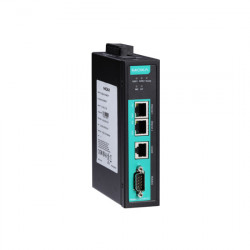
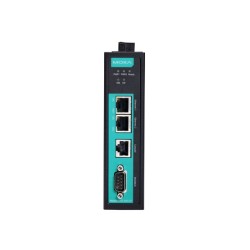
A protocol gateway sits between a legacy field device, communicating over Modbus RTU, PROFIBUS, or another serial protocol, and a modern Ethernet network. It receives data in the legacy protocol, translates it into a contemporary format, including Modbus TCP, EtherNet/IP, PROFINET, or OPC UA, and forwards it to the destination system over Ethernet. The translation happens bidirectionally and in real time.
The legacy device requires no modification. The modern SCADA or analytics platform receives clean, structured data as if the field device were a native Ethernet device. This is the most cost-effective path for serial-to-Ethernet integration in facilities where replacing legacy equipment is financially or operationally impractical.
OT Protocol Architecture: Managing Multi-Protocol Complexity
OT protocol architecture is the practice of mapping, managing, and integrating communication protocols across an industrial network. In many facilities, the protocol landscape is far more complex than the documentation suggests. Different protocols often operate across multiple Purdue Model layers, and teams may not have a complete view of which systems communicate with each other.
Common challenges include:
- Multiple protocols running simultaneously across OT layers.
- Limited visibility into device-to-device communication.
- Difficulty deciding where protocol translation or standardization is needed.
- The need to preserve legacy industrial communication while integrating with modern infrastructure.
A well-designed OT protocol architecture creates clear communication paths between field devices, controllers, RTUs, SCADA systems, historians, edge platforms, and enterprise applications. Protocol diversity develops over years of system expansions and equipment upgrades, resulting in combinations of Modbus RTU, Modbus TCP, EtherNet/IP, PROFINET, OPC UA, MQTT, DNP3, and other industrial communication protocols operating within the same facility. Without a structured architecture, this mix can lead to interoperability issues, isolated data, and unnecessarily complex engineering work.
The goal of OT protocol architecture is not to force every system onto one protocol. The goal is to enable reliable, secure, and efficient communication across the entire operational environment:
- Reliable communication between OT systems.
- Secure data exchange across Purdue layers.
- Scalability for future Industrial IoT and Industry 4.0 initiatives.
- Continued support for existing legacy assets.
Industrial protocol gateways, protocol converters, and edge connectivity platforms are often used to bridge gaps between legacy systems and modern applications, improving visibility and modernization without replacing all existing infrastructure. Bridging legacy protocols into a modern network also expands the attack surface that those protocols were never designed to defend; see OT Cybersecurity in Industrial Networks for how to secure protocol gateways and legacy devices once they are Ethernet-connected.
Industrial Communication Protocols by Industry
Industrial communication protocols are not interchangeable across environments. Each industry has developed preferred standards based on its operational requirements, legacy infrastructure, and regulatory frameworks. The table below maps the most critical industry deployments:
| Industry | Primary Protocols | Legacy Protocols Still Active | Key Integration Challenge |
|---|---|---|---|
| Manufacturing | PROFINET, EtherNet/IP, OPC UA | Modbus RTU, PROFIBUS | Motion control determinism |
| Energy and Power | IEC 61850, Modbus TCP | DNP3, IEC 60870 | Substation protocol diversity |
| Oil and Gas | Modbus TCP, OPC UA | Modbus RTU, HART | Remote asset legacy integration |
| Transportation | DNP3, MQTT | Serial proprietary | Wide geographic coverage |
| Water and Wastewater | Modbus TCP, DNP3 | Modbus RTU | SCADA legacy bridging |
| Marine | NMEA 2000, Modbus TCP | Serial proprietary | Shipboard multi-vendor systems |
Protocol Integration in a Water Treatment Facility
A regional water utility operating 14 remote pumping stations across a 340-kilometer service area was running a legacy SCADA architecture built entirely on Modbus RTU over RS-485 serial links. As the utility began modernizing its central SCADA platform to support OPC UA connectivity and cloud-based analytics, a critical compatibility gap emerged: none of the existing field RTUs supported Ethernet or OPC UA natively. Replacing the installed RTUs would have required a substantial capital investment, extensive installation work, and significant operational disruption across the network.
Manuauto's engineering team proposed a protocol-bridging approach using Moxa MGate protocol gateways deployed at each pumping station, converting Modbus RTU serial data from existing RTUs into Modbus TCP over Ethernet, then forwarding it to the central OPC UA SCADA server through a secure VPN tunnel. The deployment was completed across all stations without interrupting pumping operations during installation. Total hardware and deployment costs came in with a significant reduction against the replacement estimate. The utility gained full OPC UA connectivity to all 14 stations, real-time monitoring visibility, and a cloud-ready data pipeline, while every original RTU remained in service.
Frequently Asked Questions
What is the difference between Modbus RTU and Modbus TCP?
Modbus RTU operates over serial connections, RS-232 or RS-485, and is the right choice for legacy devices built before industrial Ethernet was viable. Modbus TCP wraps the same protocol inside TCP/IP packets and runs over standard Ethernet infrastructure, which is compatible with modern SCADA systems, HMI platforms, and network management tools. When integrating legacy Modbus RTU devices into a modern network, a serial device server or protocol gateway handles the conversion without hardware replacement. The choice between Modbus TCP and Modbus RTU is determined by existing infrastructure, not preference.
What makes OPC UA different from other industrial communication protocols?
Most industrial communication protocols were designed for specific hardware ecosystems or communication layers and were fast and reliable within their intended scope, but limited in security and interoperability beyond it. OPC UA was designed with security in mind, enabling standardized and secure communication across all levels from the field up to the cloud. It is platform-independent, carries semantic data models alongside raw values, and supports encryption and authentication at the protocol level. For IT/OT convergence and IIoT integration, no other protocol currently matches its combination of security, interoperability, and scalability.
What is fieldbus communication, and is it still relevant in modern OT networks?
Fieldbus communication systems were the backbone of industrial process control long before Ethernet became viable in harsh environments, and they remain deeply embedded across the world's most critical industrial infrastructure. PROFIBUS, DeviceNet, Foundation Fieldbus, and CANopen are serial, deterministic, and purpose-built for process control. The installed base remains enormous, particularly in process industries, energy, and water infrastructure, where equipment lifecycles span 20 to 30 years. Fieldbus systems are not being replaced wholesale; they are being integrated through protocol gateways and serial-to-Ethernet solutions into modern architectures, preserving the infrastructure investment while extending data reach to modern platforms.
The Right Protocol Strategy Starts With the Right Partner
Protocol incompatibility is one of the most persistent and costly challenges in industrial OT network management. The good news is that it is a solvable problem, and solving it rarely requires replacing the infrastructure behind it. The right combination of protocol gateways, serial device servers, and engineering expertise closes the gap between legacy industrial communication infrastructure and modern network platforms without disrupting operations.
Manuauto supplies and supports the full range of OT protocol architecture and integration solutions across Canada and North America, from MGate gateways and NPort serial device servers to full multi-protocol OT network design and deployment services. Pre-sales engineering consultation, fast distribution, and a price match guarantee on every order.