
The Safe Path to Ethernet Connectivity in Explosive Environments

Ethernet-APL (Advanced Physical Layer) is an industrial communication standard developed on top of the IEEE 802.3cg 10BASE-T1L Single Pair Ethernet specification. It was designed with process automation and hazardous-area installations in mind, giving field-level instruments a direct, dependable Ethernet connection. Because a single twisted-pair cable carries both power and data, Ethernet-APL cuts down on cabling and installation effort while shortening project timelines. It supports full-duplex communication at 10 Mbps over distances up to 1,000 meters, making it a solid, scalable base for industrial network optimization and for connecting modern field instruments in Industry 4.0 settings.
Why Ethernet-APL Matters for Industrial Networks
One Twisted Pair, Simplified Wiring
Only one twisted-pair cable is needed for Ethernet-APL, which lowers material costs and speeds up field installation across the network.

Power and Data on the Same Cable
Since power and data travel over the same pair, there's no need for a separate power run through the process environment.

Faster Field-Level Data Exchange
Running at up to 10 Mbit/s full-duplex, Ethernet-APL leaves legacy field protocols far behind, over 300 times faster, opening the door to quicker process data exchange.
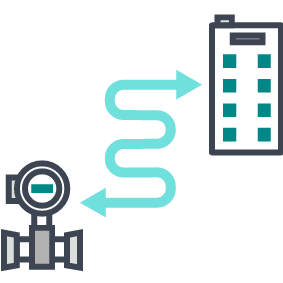
Longer Cable Runs
Communication stays steady across cable runs as long as 1,000 meters, which suits large plants and spread-out process sites well.

Explosion Protection Built In
With intrinsic explosion-protection features designed into it, Ethernet-APL can be deployed safely in hazardous, potentially explosive areas of an industrial site.
Ethernet-APL Compared to Single Pair Ethernet
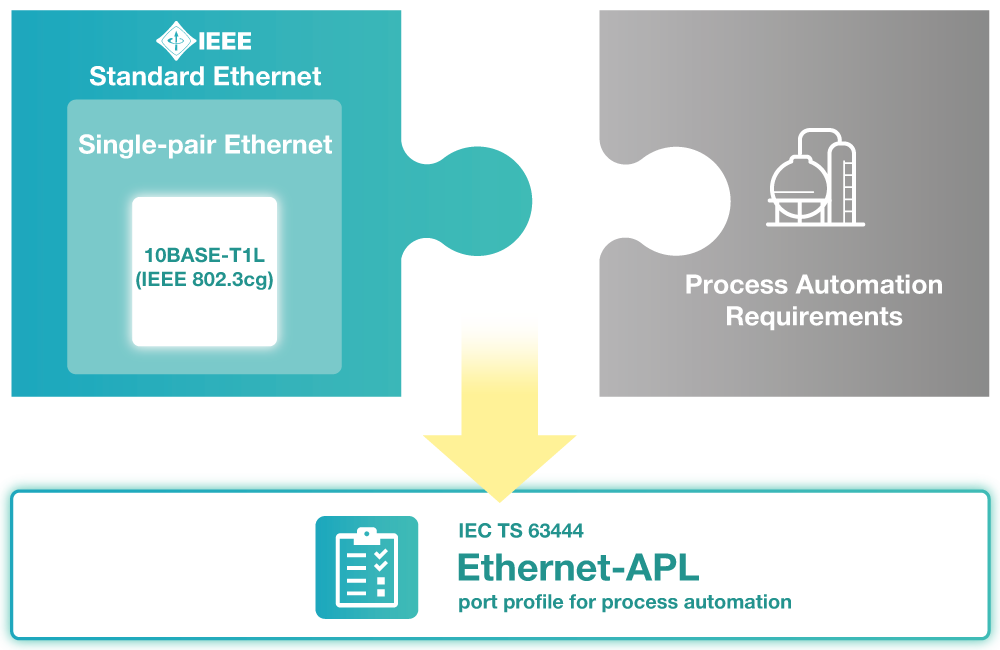
Ethernet-APL is standardized under IEC TS 63444:2023, and it takes the IEEE 802.3cg 10BASE-T1L single-pair Ethernet (SPE) base and adapts it to meet the specific needs of process automation in industries like oil and gas, chemical processing, and pharmaceuticals. This dedicated profile lets field instruments plug straight into industrial Ethernet networks through a handful of key traits:
- Standardized power delivery: power and data move together over one twisted pair, using predefined, industry-recognized power classes.
- Hazardous area protection: built-in safety features allow installation in classified hazardous areas, covering both intrinsically safe (CID2 Zone 0/1) and non-intrinsically safe (CID2 Zone 2) setups.
- Simplified field connectivity: electrical parameters, topology rules, port classifications, and device roles are all clearly defined for consistent, dependable field installations.
The Role of Ethernet-APL in Optimizing Industrial Networks
Ethernet-APL is changing how industrial networks are optimized by bringing high-speed Ethernet connectivity all the way down to field-level devices in process plants. It's built on the Single Pair Ethernet (SPE) standard and combines reliable communication with power delivery over one twisted-pair cable, while still meeting the safety demands of hazardous locations. Because it supports explosion-protected installations, Ethernet-APL makes it straightforward to connect field instruments, controllers, and industrial Ethernet networks together. The outcome is a scalable communication backbone that raises operational efficiency, strengthens plant safety, and speeds up digital transformation across industrial facilities.
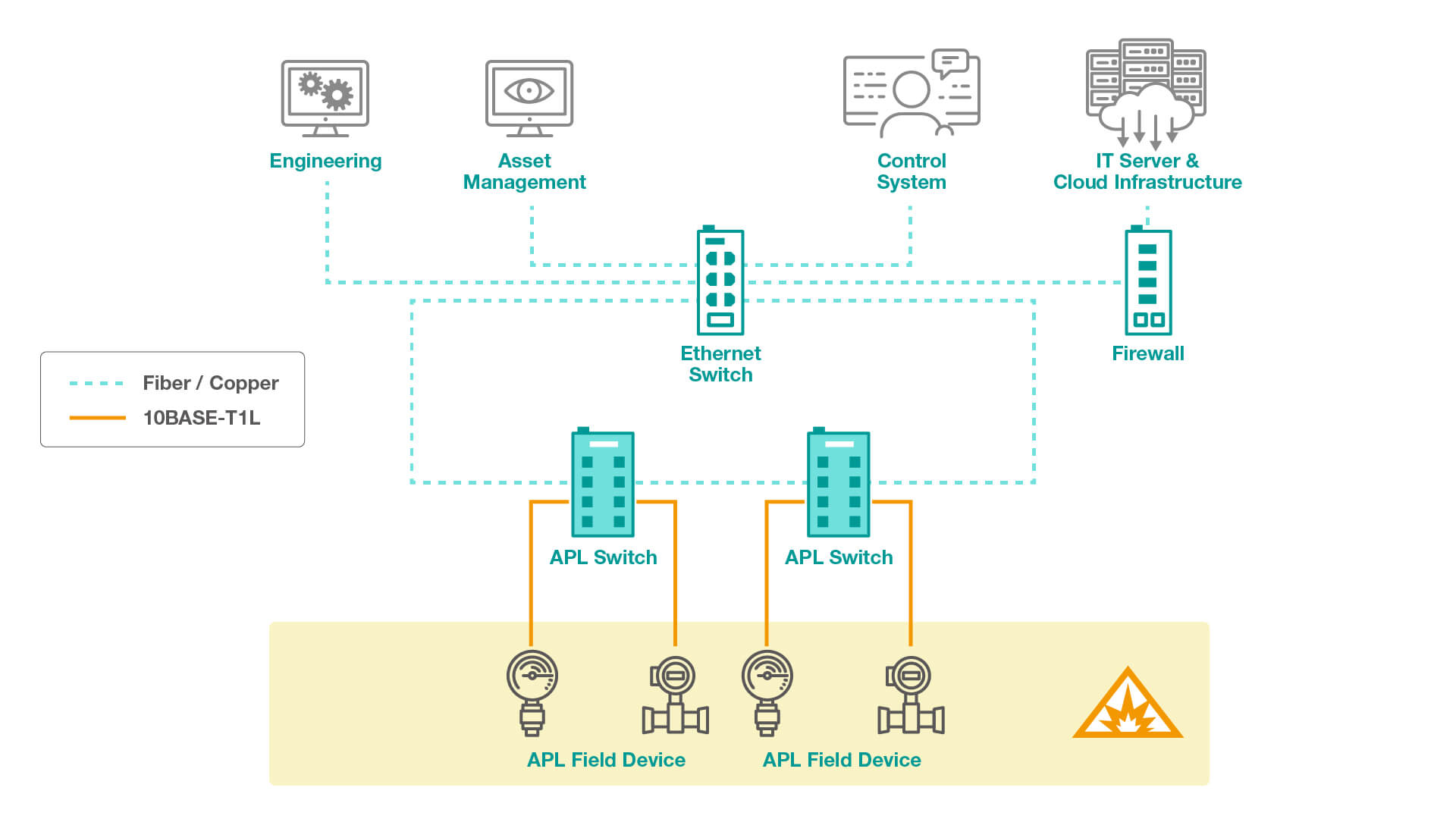
Where Ethernet-APL Is Used in Industry
Ethernet-APL is built for process industries that need secure, long-distance, dependable communication. Oil and gas, chemical processing, mining, pharmaceuticals, and water treatment are among the sectors that lean on Ethernet-APL to keep connectivity solid in demanding, hazardous settings. By pushing Single Pair Ethernet (SPE) out to the field level, Ethernet-APL makes it easier to bring intelligent field devices online, supports industrial network optimization, improves operational safety, and moves process automation systems further along the path to digital transformation.

What these environments demand:
- Consistent, 24/7 performance that can hold up under harsh, hazardous process conditions.
- The ability to scale across large installations and remote field sites.
- Constant, real-time insight into field-level monitoring and control.
How Ethernet-APL answers that:
- Explosion-protected by design: built for hazardous locations, Ethernet-APL is meant to operate safely in explosive atmospheres typical of oil and gas, mining, and chemical plants.
- Long-distance connectivity: with cable runs up to 1,000 meters, Ethernet-APL reaches distributed field instruments across large sites without losing signal quality.
- Real-time data throughput: at up to 10 Mbit/s, Ethernet-APL beats out conventional field protocols, allowing quicker data collection, tighter control, and better-informed operational decisions.
Ethernet-APL: Common Questions Answered
Ethernet-APL is changing industrial communication by making reliable, high-speed data transfer possible over long distances in tough environments. This section works through some of the questions that come up most often about Ethernet-APL.
Getting the full benefit of Ethernet-APL's architecture means using hardware built for it, APL-compatible field instruments such as sensors and actuators, along with dedicated APL switches handling network communication. Since this equipment is natively compatible, there's no need for extra gateways or field barriers, which keeps the overall network simpler and leaner.
Traditional 4-20mA technology is held back by low data throughput and rigid point-to-point wiring. Ethernet-APL moves past those limits with much higher data rates, more flexible network layouts, and native compatibility with existing IT systems. That combination makes Ethernet-APL a strong choice for modern process automation projects that need real-time control, richer data analytics, and smooth interoperability between different field devices and systems.
Hazardous industrial zones can contain explosive gases, vapors, or combustible dust, which is exactly why specially certified communication equipment is needed there, it keeps ignition risk down and operations safe.
Traditional fieldbuses opened the door to digital communication at the field level, but they've generally struggled with added complexity, limited data rates, restricted scalability, and interoperability headaches that slowed wider adoption. Ethernet-APL takes a different route: built on standard Ethernet protocols, it offers higher throughput, easier integration, and stronger protocol compatibility. That adds up to a more modern way of handling field-level connectivity, simpler to deploy and better performing overall.
Since it's a protocol-independent physical layer, Ethernet-APL can serve as the foundation for a wide range of industrial Ethernet protocols, PROFINET, EtherNet/IP, HART-IP, and OPC UA among them. Ethernet-APL itself doesn't dictate application-layer behavior, but standards bodies are actively working to bring these protocols in line with APL. That ongoing work is what positions Ethernet-APL as a future-ready base for interoperable, high-performance communication across process automation networks.
Moxa's Ethernet-APL Solution for Process Automation
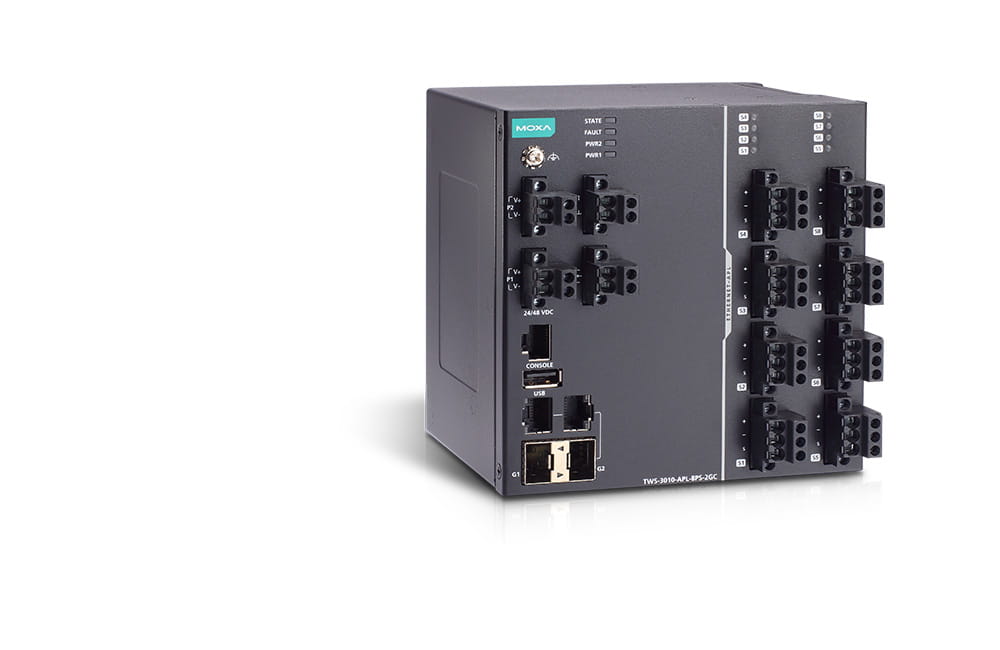
TWS-3010-APL Series
A managed Ethernet switch with 8 Ethernet-APL spur ports and 2 1GbE uplink ports, built for straightforward process automation connectivity
Features and benefits
- 8 spur ports based on the IEEE 802.3cg 10BASE-T1L Ethernet-APL standard
- Ethernet-APL Power Classes A and C supported on every spur port
- Compact, space-saving form factor for quick, flexible field installation
- Wide industrial protocol support, covering EtherNet/IP, PROFINET, and Modbus TCP
Related Products

