A conveyor system detecting a bearing failure needs a response in milliseconds, not the round-trip time to a cloud server and back. A remote pipeline monitoring station needs to keep transmitting operational data during a WAN outage. A motion control system coordinating six servo drives cannot tolerate the latency variability that cloud routing introduces. These are not edge cases. They are the operational reality that makes edge computing in industrial automation not a trend, but an engineering requirement.
Industrial facilities are moving compute closer to the machines it serves for the same reason they moved control loops onto local PLCs decades ago: physics doesn't negotiate. A network hiccup that costs a web application a few seconds of latency costs a production line a scrapped batch, a safety interlock delay, or an unplanned shutdown. Private 5G rollouts, data-sovereignty requirements, and the sheer volume of data coming off modern sensors have only sharpened this calculus, but the underlying driver has always been the same: some decisions have to happen where the data is generated, not wherever the nearest data center happens to be.
This guide is for the engineers and operations managers deciding where data gets processed, how it moves through the network, and what the architecture looks like between a PLC and a cloud platform. It builds directly on our Complete Guide to Industrial Network Architecture in OT Systems, which covers the Purdue Model and OT network fundamentals this guide assumes.
What Edge Computing Actually Means in an OT Context
The term gets used loosely. In an OT context, edge computing in industrial automation has a specific architectural meaning, and understanding it is the prerequisite for every design decision that follows.
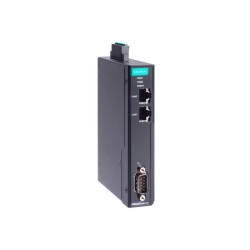
The industrial edge sits between field-level control devices, including PLCs, RTUs, and sensors, and the supervisory or enterprise systems above them in the Purdue Model. Devices at this layer do not just pass data through. They process it: filtering raw sensor streams, aggregating readings across devices, executing local control logic, converting between protocols, and forwarding only the relevant, processed data upward. The result is faster local response, lower bandwidth consumption, and operational continuity that does not depend on a stable WAN connection.
Three operational requirements drive most industrial edge deployments:
- Latency reduction: processing data at the source eliminates the round-trip time to centralized systems. For time-sensitive applications, the difference between local edge processing and cloud processing is the difference between under 10 milliseconds and 200 to 500 milliseconds.
- Bandwidth optimization: a facility running hundreds of sensors generates enormous raw data volumes. Edge devices filter, aggregate, and compress data before transmission, sending processed intelligence rather than raw streams.
- Operational resilience: edge processing continues when WAN or cloud connectivity is interrupted, a design requirement for remote assets, offshore installations, and distributed infrastructure.
What is the Purdue Model, and how does it apply to industrial edge computing?
Formally, the Purdue Enterprise Reference Architecture is a five-level hierarchical framework organizing OT and IT systems from physical process equipment at Level 0 to enterprise IT at Level 4. Edge computing devices sit at the boundary between Level 1 field devices and Level 3 operations management systems, handling protocol conversion, local data processing, and secure data forwarding without creating direct pathways between field-level control systems and enterprise or cloud platforms. A deeper breakdown of the Purdue Model is available in our Complete Guide to Industrial Network Architecture in OT Systems.
PLC to Cloud Architecture: The Complete Data Journey
PLC to cloud architecture is the end-to-end engineering challenge of moving operational data from a field-level controller to an enterprise or cloud platform reliably, securely, and in a format the receiving system can actually use. Every transition point in that journey is a design decision with operational consequences. The journey has five distinct stages, and the edge layer is where most of the critical engineering happens.
| Stage | Layer | Primary Device | Engineering Decision | Common Failure Point |
|---|---|---|---|---|
| Data Generation | Field, Level 0–1 | Sensors, PLCs, RTUs | Protocol selection, sampling rate | Incompatible protocols, oversampling |
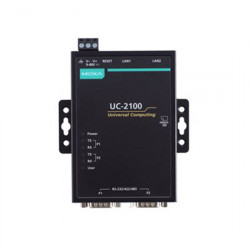
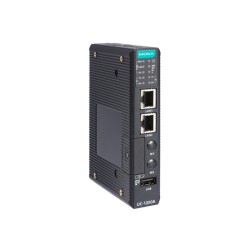
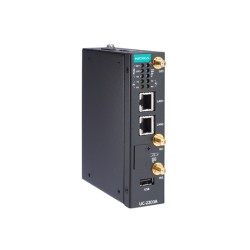
| Edge Processing | Edge, Level 1–2 | IIoT gateway, edge computer | Local processing scope, protocol conversion | Underpowered hardware, missed filtering |
| Supervisory Layer | Level 2–3 | SCADA, historian | Data contextualization, storage architecture | Historian capacity, SCADA integration gaps |
| Enterprise Integration | Level 3–4 | MES, ERP | Data format standardization, API design | Schema mismatch, integration latency |
| Cloud Analytics | Above Level 4 | Cloud platform | Data model, analytics architecture | Bandwidth cost, data volume management |
The edge processing stage is where the most consequential decisions happen and where most OT data architecture problems originate. An edge device that is underpowered for its processing load introduces the latency it was deployed to eliminate. A gateway configured to forward raw data without filtering defeats the bandwidth optimization that justified its deployment. Getting this stage right determines whether the rest of the industrial data pipeline performs as designed.
| Requirement | Edge Processing | Cloud Processing |
|---|---|---|
| Response time | Under 10 ms | 200 ms to 500 ms+ |
| WAN dependency | None, operates independently | Full dependency |
| Data volume handled | High, filters at source | High — requires bandwidth |
| Analytics complexity | Limited, rule-based, ML inference | Full — model training, deep analytics |
| Cost model | Hardware CapEx | Bandwidth and compute OpEx |
| Best for | Real-time control, safety, predictive alerts | Historical analysis, cross-site optimization |
Protocol Normalization at the Gateway
Field devices rarely speak the same protocol the receiving platform expects. A gateway that only forwards data without translating it simply moves the integration problem one hop upstream. Protocol normalization at the gateway converts Modbus RTU, PROFINET, and other field-level formats into a single consistent structure, typically OPC UA or MQTT, before the data leaves the edge layer. See our Industrial Communication Protocols in OT Networks guide for how these protocols are structured and where gateway-level translation fits.
Doing this at the edge, rather than downstream at the SCADA or historian layer, means every consuming system, from a local HMI to a cloud analytics platform, receives clean, consistently structured data regardless of which protocol the original field device spoke. Adding a new device type to the network requires configuring one gateway, not reworking every downstream integration.
OT Data Architecture for Building the Industrial Data Pipeline
OT data architecture is the structural design of how operational data flows through an industrial network from generation at the field device to consumption at the analytics or enterprise platform. It is a series of interconnected decisions about processing location, protocol selection, data format, storage strategy, and security boundaries. The most common industrial data pipeline architecture in modern OT environments follows three processing tiers:
- Tier 1 — Real-time edge processing: data processed at the device or gateway level, including anomaly detection, threshold alerting, and local control logic. Latency is measured in milliseconds, with no WAN dependency. Protocol conversion happens here, from Modbus RTU, PROFINET, and IO-Link into OPC UA and MQTT.
- Tier 2 — Site-level aggregation: data from multiple edge nodes is aggregated at a site-level server or historian, contextualized, time-stamped, and stored for short-term access. Latency is measured in seconds. It feeds SCADA dashboards and forwards processed data upward.
- Tier 3 — Enterprise and cloud analytics: historical data is analyzed, cross-site benchmarking is performed, digital twin models are built, and machine learning models are trained. Latency is measured in minutes to hours, feeding insights back to Tier 1 through updated ML inference models.
According to the U.S. Bureau of Labor Statistics, durable manufacturing productivity increased by 5.5% in the first quarter of 2026, while total manufacturing productivity rose by 3.2% over the same period, underscoring the role edge computing plays in letting businesses act on data at the point of production.
How does an industrial data pipeline differ from a standard IT data pipeline?
A standard IT data pipeline moves data between software systems where latency tolerances are measured in seconds, and the primary concern is data integrity. An industrial data pipeline starts at a physical device, a sensor, a PLC, a drive, where millisecond latency, 24/7 continuity, and proprietary protocol support are baseline requirements. The pipeline must hold its own when upstream connectivity fails, and unlike IT pipelines, OT data architecture must protect against threats capable of causing physical harm, not just data loss.
Real-Time Industrial Analytics at the Edge
Real-time industrial analytics is not a single application. It is a category of use cases defined by one shared requirement: the analysis must happen fast enough to influence the physical process it is monitoring. Three use cases account for most industrial edge analytics deployments.
Process Quality Control
Machine vision and inline measurement systems process quality data at the edge, detecting dimensional defects, surface anomalies, and assembly errors directly at the point of production rather than relying on end-of-line inspection. Edge processing here is not an optimization but a functional requirement: accept or reject decisions must occur within the production cycle time.
Energy Consumption Optimization
Real-time energy monitoring at the machine and production cell level is processed at the edge to enable immediate load balancing, demand response, and consumption optimization without waiting for centralized analytics cycles. Machine-level power metering systems deliver the granularity that edge processing converts into actionable optimization signals in real time.
Real-Time Edge Decision Systems
Real-time decision-making systems at the edge are designed to act, not only report. The decision loop closes locally at the speed the physical process requires, without dependence on infrastructure outside the facility perimeter. Condition monitoring sensors feed granular vibration and temperature profiles directly into edge pipelines, capturing signatures that cloud-only systems often cannot process quickly enough to prevent unplanned downtime. Every one of these use cases depends on the OT network moving data deterministically in the first place; see our Industrial Ethernet in OT Networks guide for the network layer underneath the edge.
Industrial Edge Computing Use Cases by Industry
Edge computing in industrial automation is not equally impactful across every application. The table below maps where local processing delivers the most operationally significant results, and why.
| Industry | Primary Edge Use Case | Operational Requirement | Why Cloud-Only Falls Short |
|---|---|---|---|
| Manufacturing | Quality control, predictive maintenance | Sub-second cycle-time decisions | Cloud round-trip exceeds production cycle time |
| Oil and Gas | Remote well and pipeline monitoring | Operation during WAN/satellite outages | Remote sites cannot guarantee constant connectivity |
| Energy and Power Utilities | Substation protection, grid monitoring | Sub-10 ms local response | Grid protection cannot tolerate cloud latency |
| Mining | Autonomous equipment, hazard detection | Real-time safety response underground | Limited or no connectivity below surface |
| Water and Wastewater | Distributed pump station control | Continued operation during SCADA link loss | Sites too dispersed for constant central control |
| Transportation and Railway | Real-time signaling, onboard diagnostics | Sub-second response for safety systems | Signaling cannot depend on remote processing |
| Marine and Ports | Propulsion and navigation control | Independent operation during voyages | Vessels lose shore connectivity at sea |
Edge Computing in a Distributed Manufacturing Environment
A discrete parts manufacturer operated multiple production facilities across a wide geographic region. Its monitoring system relied on a centralized cloud analytics platform. Historical reporting functioned well, but real-time visibility remained limited. Network latency between sites and the cloud increased under normal load and worsened during peak production periods, so anomalies reached the operations dashboard too late. By that time, issues had already moved through downstream process stages, and quality defects were often detected only at end-of-line inspection, increasing scrap and rework costs across all facilities. Manuauto's engineering team deployed a tiered edge architecture using industrial edge computers at each production facility, processing condition monitoring and quality sensor data locally against rule-based anomaly detection models. MQTT-based forwarding to the central cloud platform was maintained for historical analytics and cross-site benchmarking, but all real-time alerting and process adjustment triggering moved to the edge layer. Local processing latency dropped to a fraction of what the cloud round-trip had been delivering. Within the first quarter of operation, the rate of quality excursions detected at the point of occurrence, before downstream propagation, improved dramatically. The architecture that changed was not the cloud platform. It was the decision about where the real-time work actually needed to happen.
Frequently Asked Questions
What is edge computing in industrial automation, and how does it differ from cloud computing?
Edge computing in industrial automation moves data processing to the point of generation: the machine, the production cell, or the remote field asset. Cloud computing centralizes processing on remote servers, powerful and scalable but dependent on WAN connectivity and subject to round-trip latency that time-sensitive industrial applications cannot tolerate. In a well-designed industrial IoT architecture, both play defined roles: edge for real-time decision-making and local continuity, cloud for historical analytics and cross-site optimization. The question is not edge versus cloud. It is which processing belongs at which layer.
What is the difference between edge computing and fog computing in industrial OT environments?
Both describe distributed architectures that move processing closer to data sources, but at different layers. Edge computing places processing directly at the machine or field device. Fog computing aggregates data from multiple edge nodes at an intermediate layer before forwarding to cloud or enterprise systems. Most industrial IoT deployments use both: edge for immediate device-level decisions, fog for multi-asset aggregation and data pipeline management.
What is PLC to cloud architecture, and why is the edge layer critical?
PLC to cloud architecture is the complete data pathway from a field-level controller to an enterprise or cloud platform. The edge layer handles protocol conversion, data filtering, local analytics, and WAN continuity. An industrial data pipeline without a properly designed edge layer either floods the cloud with unfiltered data or introduces latency that undermines the real-time value of the analytics it was deployed to deliver.
PLC-to-cloud: How does edge computing support predictive maintenance in OT environments?
Predictive maintenance at the edge processes condition monitoring data, vibration, temperature, current signatures, locally against anomaly detection models, identifying failure patterns days to weeks before the event occurs. Cloud-based predictive maintenance introduces round-trip latency that can turn an early warning into a missed alert. Latency reduction through edge processing closes that gap, enabling maintenance decisions at the speed the asset requires.
What makes industrial IoT architecture different from standard IoT architecture?
Standard IoT tolerates latency, operates in controlled environments, and focuses on data collection. Industrial IoT architecture operates under fundamentally different constraints: millisecond latency requirements, continuous 24/7 operation, hardware rated for extreme conditions, and security requirements protecting against threats that cause physical harm. Real-time decision-making systems at the industrial edge must operate independently of cloud connectivity and integrate with decades of legacy OT infrastructure.
As OT environments adopt industrial edge computing for local data processing, cybersecurity strategies must extend to edge devices and edge-to-cloud data flows; see our guide to OT Cybersecurity in Industrial Networks for how to secure that layer.
The Edge Layer Is Where Industrial Operations Are Won or Lost
The difference between an operation that catches problems early and one that discovers them after they have already caused damage is increasingly a function of where data gets processed. Centralizing everything in the cloud is not a strategy. It is a deferral of the engineering decisions that actually determine operational performance.
Manuauto supplies and supports the full range of industrial edge computing hardware across Canada and North America, from edge gateways to full OT data architecture design and deployment, with pre-sales engineering consultation, fast distribution, and a price match guarantee on every order.