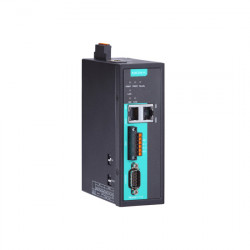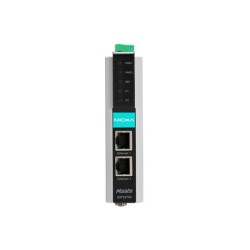
The threat landscape has changed. Fast.
Ransomware campaigns targeting industrial organizations have accelerated sharply in recent years, and the number of incidents causing physical disruption on the plant floor has grown right alongside them. New malware strains built specifically to target industrial control systems continue to emerge, each one narrowing the gap between a routine IT breach and a process-level shutdown.
OT cybersecurity is no longer a future concern. It is an active operational requirement, and the gap between organizations that have addressed it and those that have not is closing faster than most security teams expected.
This guide is not about cybersecurity theory. It is about the specific architectural decisions that determine whether an industrial network can defend itself and keep running when it is targeted.
Why OT Networks Are a Different Security Problem
Most cybersecurity frameworks were built for IT environments. OT environments operate under fundamentally different constraints.
In IT, a security patch can be pushed overnight. In OT, the same patch requires careful validation, because the device it touches may be controlling a live production line or a power grid. In IT, a brief system outage is an inconvenience. In OT, it is a production stoppage, a safety event, or a regulatory violation.
The industrial attack surface has expanded dramatically with IT/OT convergence. Remote access, cloud connectivity, and IIoT deployments have created pathways into OT systems that did not exist a decade ago. The overwhelming majority of OT cyberattacks that end up causing physical impact don't originate inside the OT network at all — they arrive indirectly, through a compromised IT system or a cloud-connected dependency. Flat networks where IT and OT are poorly segmented remain the single most common enabler of that path.
Cyber-physical systems security is not an IT problem that has wandered into the industrial space. It is a distinct discipline with its own frameworks, threat models, and operational constraints.
Table 1 — Key Differences: IT Security vs OT Security
| Characteristic | IT Security | OT Security |
|---|---|---|
| Primary priority | Confidentiality | Availability |
| Patching tolerance | Regular, automated | Carefully validated, infrequent |
| Downtime tolerance | Minutes acceptable | Seconds critical |
| Security tools | Standard IT security stack | OT-specific, protocol-aware |
| Threat consequence | Data loss, financial | Physical damage, safety incidents |
| Compliance framework | ISO 27001, NIST CSF | IEC 62443, NERC CIP |
Why can't standard IT cybersecurity tools protect OT networks?
Standard IT security tools were designed for environments where availability is secondary to confidentiality. In OT environments, that priority is reversed. Deploying them without modification risks disrupting the deterministic communication that industrial processes depend on, and they do not understand industrial protocols. A firewall that cannot inspect Modbus function codes cannot distinguish a legitimate read command from a malicious write. OT cybersecurity requires purpose-built tools designed around cyber-physical systems security, not IT tools adapted after the fact.
IEC 62443: The Security Standard Built for OT
IEC 62443 is the internationally recognized standard for cybersecurity in industrial automation and control systems. Developed by the International Electrotechnical Commission through Technical Committee 65, it is built around OT's operational priorities: availability first, integrity second, confidentiality third.
Three things make IEC 62443 the right framework for industrial network security:
- It is OT-specific. Unlike ISO 27001 or NIST CSF, which apply broadly across IT environments, IEC 62443 was designed around shop-floor realities: power plants, assembly lines, water treatment facilities, and substations.
- It is risk-driven. The standard defines four Security Levels, SL1 through SL4, matched to the sophistication of the threat the system needs to defend against. A small manufacturing facility and a nuclear facility do not need the same security architecture. IEC 62443 accounts for that.
- It is architectural. The standard's core concept, industrial security zones and conduits, provides a practical framework for segmenting OT networks and controlling communication between segments. That architecture is the foundation of every defensible industrial network.
Most industrial organizations still don't have compliance regulations specific to control-system or IIoT security in place, and fewer still are genuinely familiar with the standards that apply to their industry. That gap is not just a compliance risk. It is an operational exposure.
Industrial Security Zones and Conduits: How IEC 62443 Segments a Network
Industrial security zones and conduits are the core architectural concept of IEC 62443 and the most practically actionable framework for securing an OT network.
A security zone groups assets that share the same security requirements and trust level. Devices within a zone communicate freely. Communication between zones passes through a conduit: a defined, monitored, controlled pathway that enforces security policy between zones with different trust levels.
A conduit, in the IEC 62443 model, is a logical grouping of communication channels between two or more zones, defined by attributes such as which zones it interconnects, what types of data flow are permitted, and what security policies govern that flow.
In practice, a well-segmented OT network defines zones along operational boundaries:
Table 2 — OT Security Zone Architecture
| Zone | Assets | Trust Level | Conduit Control |
|---|---|---|---|
| Safety Zone | Safety instrumented systems, ESD | Highest | Strictly controlled, minimal traffic |
| Process Control Zone | PLCs, DCS, RTUs | High | Process protocols only |
| Supervisory Zone | SCADA, HMI workstations | Medium-High | OPC UA, historian traffic |
| Operations Zone | MES, historian, engineering | Medium | Firewall controlled |
| Industrial DMZ | Protocol converters, jump servers | Boundary | Strictly filtered in both directions |
| Enterprise Zone | ERP, corporate IT | Lower | Firewall, VPN, MFA |
| Remote Access Zone | Vendor access, remote engineers | Controlled | VPN, MFA, session recording |
The Industrial DMZ, sitting between Operations and Enterprise zones, is the most critical boundary. It prevents lateral movement, the technique attackers use to reach OT systems from a compromised IT entry point. A large share of OT attacks with physical consequences trace back to exactly this boundary being missing or poorly enforced — flat networks where IT and OT were never properly separated. To explore industrial network architecture in OT systems in more detail, see the Complete Guide to Industrial Network Architecture in OT Systems, which explains the core layers, communication flow, and design principles.
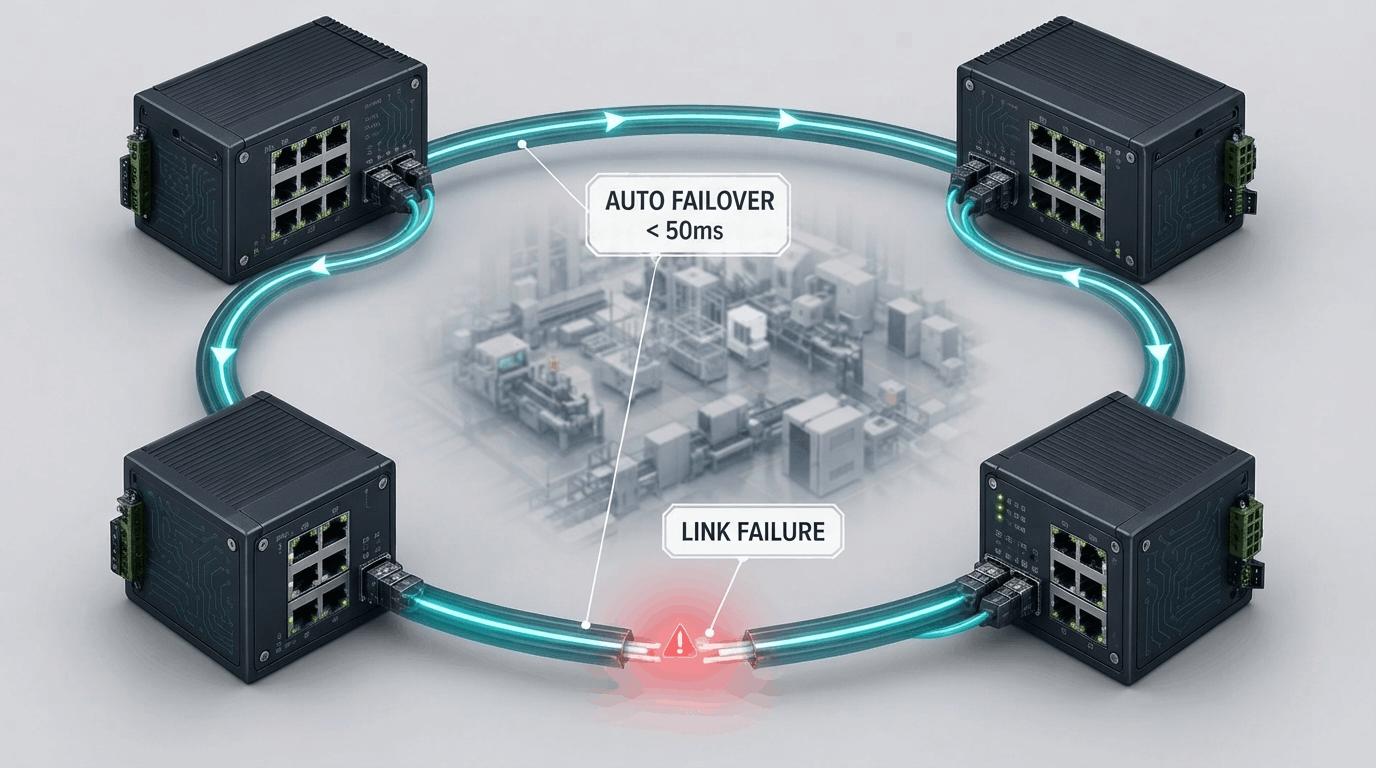
What is the Industrial DMZ, and why is it the most important security boundary in an OT network?
The Industrial DMZ sits between OT systems and enterprise IT infrastructure, allowing data to pass between them without creating a direct pathway. Every cross-boundary communication is inspected, filtered, and logged at this layer. A SCADA historian forwarding data to an analytics platform passes through it. A remote vendor accessing a PLC passes through it. Without a properly implemented Industrial DMZ, a compromised IT system has a direct path into the OT network, the architectural vulnerability behind the majority of OT cyberattacks with physical consequences.
Three Core OT Cybersecurity Controls
Network segmentation in industrial systems, SCADA firewall protection, and secure remote access industrial architecture address the three most common OT attack vectors. Each is a distinct control. Together, they form the minimum viable security architecture for any connected industrial network.
Network Segmentation in Industrial Systems
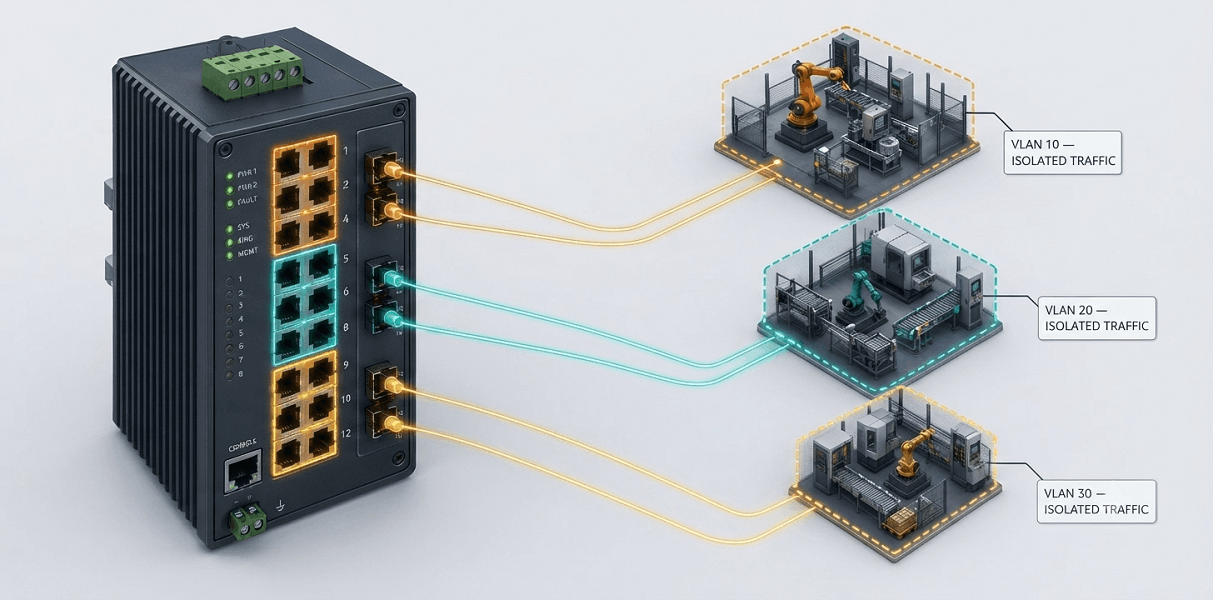
Segmentation limits how far a threat can travel once inside the network. VLANs create logical boundaries between process control, supervisory, and enterprise traffic on the same physical infrastructure. Managed industrial Ethernet switches enforce those boundaries at the port level. Legacy industrial protocols such as Modbus and EtherNet/IP remain the most frequently targeted, largely because of their age, wide adoption, and weak native authentication. Without segmentation, a compromised device on one network segment has unrestricted access to every other device on the same flat network.
OT Attacks by Targeted Protocol
VLANs are enforced at the switch level, so the switching hardware itself is part of the security architecture; see Industrial Ethernet in OT Networks for managed switch selection and VLAN configuration.
SCADA Firewall Protection
SCADA firewall protection requires more than standard port-and-IP filtering. A firewall that does not understand Modbus TCP cannot distinguish a legitimate read command from a malicious register write. OT-aware deep packet inspection, analyzing industrial protocol traffic at the function code level, blocks unauthorized commands while permitting legitimate operational traffic. Moxa's network security appliances deploy exactly this capability: OT-centric DPI that understands the protocol context of every packet, not just its source and destination. Knowing which function codes a device should legitimately use requires understanding the protocol itself; see Industrial Communication Protocols in OT Networks for how Modbus, PROFINET, and OPC UA structure that traffic.
Secure Remote Access in Industrial Networks
Remote access is the most common OT attack entry point. Every vendor connection, every remote engineering session, and every cloud integration is a potential pathway in. Secure remote access industrial architecture requires a VPN with multi-factor authentication, role-based access control limiting users to specific assets, session monitoring and recording, and on-demand access rather than persistent, always-on connections. Robustel's cellular VPN routers provide the secure connectivity infrastructure for remote sites. Moxa's Secure Remote Connect platform handles the access management layer, together covering both the connectivity and the access control sides of the problem.
OT Security Architecture in an Energy Facility
A regional energy distribution operator was running a flat OT network. SCADA servers, field RTUs, engineering workstations, and corporate IT systems all shared the same network segment with no meaningful segmentation between them. A routine IT security audit identified the exposure. The finding was straightforward: a compromised corporate laptop had unrestricted network access to every RTU in the distribution network.
Manuauto's engineering team designed and implemented a zone-based security architecture aligned with IEC 62443 industrial security principles. The network was segmented into five zones: Safety, Process Control, Supervisory, Operations, and Enterprise, with a dedicated Industrial DMZ at the IT/OT boundary. Moxa network security appliances with OT-aware deep packet inspection were deployed at each zone conduit. Secure remote access was consolidated through a single VPN gateway with MFA and session recording, replacing multiple ad-hoc vendor access methods that had accumulated over years of unmanaged growth. The entire deployment was completed without interrupting live distribution operations. Post-deployment, the operator had full visibility into cross-zone traffic for the first time, and a documented, auditable security architecture that satisfied regulatory requirements without a single process interruption.
OT Cybersecurity Risk by Industry
Industrial network security requirements vary by sector, but the consequences of inadequate protection do not. These are the environments where OT cybersecurity architecture carries the highest operational and safety stakes, and why:
Table 3 — OT Cybersecurity Priorities by Industry
| Industry | Highest-Value Attack Target | Consequence of Compromise | Primary Driver |
|---|---|---|---|
| Energy and Power Utilities | SCADA and substation IEDs | Regional power loss, cascading grid failure | NERC CIP compliance |
| Oil and Gas | Pipeline SCADA, remote wellheads | Environmental release, explosive-atmosphere risk | Remote, unmanned asset exposure |
| Manufacturing and Smart Factories | PLCs, robotic controllers | Production stoppage, physical equipment damage | Largest share of ransomware incidents |
| Water and Wastewater | RTUs at distributed pump stations | Contamination risk, public health impact | Chronically under-resourced security teams |
| Transportation and Railway | Signaling and train control systems | Safety-critical failure, service-wide disruption | Wide geographic attack surface |
| Mining | Autonomous equipment control systems | Personnel safety incidents, equipment loss | Remote, low-connectivity operations |
Frequently Asked Questions
What is OT cybersecurity, and how does it differ from IT cybersecurity?
OT cybersecurity protects industrial automation and control systems, including PLCs, SCADA, RTUs, and DCS, from threats that can cause physical harm. IT cybersecurity protects data. The difference is operational: an OT security incident can stop a production line, damage equipment, or trigger a safety shutdown. Every security control in an OT environment must be evaluated against its potential to disrupt the process it is protecting, a constraint IT security simply does not face.
What are industrial security zones and conduits?
Industrial security zones and conduits are the core architectural concept of IEC 62443 industrial security. A zone groups assets sharing the same security requirements. A conduit is the controlled communication pathway between zones, enforcing security policy on every cross-boundary message. Together, they ensure a compromised device in one zone cannot freely reach devices in another, limiting the blast radius of any successful attack.
What is the minimum viable OT cybersecurity architecture for a connected industrial network?
Three controls address the majority of documented OT attack vectors. Network segmentation limits lateral movement. SCADA firewall protection with OT-aware deep packet inspection blocks unauthorized protocol commands. Secure remote access architecture (VPN, MFA, session recording) controls the most common external entry point. These three controls, implemented within an IEC 62443 zone-and-conduit architecture, form the security foundation every connected OT network needs.
How does IEC 62443 define security levels for industrial networks?
IEC 62443 defines four Security Levels, SL1 through SL4, matched to the sophistication of the threat being defended against. SL1 covers unintentional violations. SL2 covers intentional attacks with simple means, the baseline for most manufacturing and utility environments. SL3 addresses sophisticated attacks, relevant for oil and gas and power utilities. SL4 addresses state-sponsored attacks, applicable to nuclear and national critical infrastructure. Matching the level to the actual threat profile is what makes IEC 62443 practical rather than aspirational.
How should OT cybersecurity be handled for legacy devices that cannot be patched or updated?
Many field devices, RTUs, and legacy PLCs run firmware that vendors no longer support, and patching them is often impossible or operationally risky. Compensating controls carry the security burden instead: strict network segmentation isolates the device within its own zone, an OT-aware firewall filters traffic at the conduit boundary, and continuous monitoring flags any deviation from its normal communication pattern. The device itself stays unchanged; the architecture around it absorbs the risk.
What role does continuous network monitoring play in an OT cybersecurity architecture?
Firewalls and segmentation control what traffic is allowed to cross a boundary, but they cannot detect a compromise happening inside a zone using permitted protocols. Continuous OT network monitoring builds a baseline of normal device behavior, communication timing, and protocol usage, then flags anomalies such as a new device appearing on the network or a controller issuing commands outside its historical pattern. It is the layer that catches what segmentation and firewalls are not designed to see.
As OT environments adopt industrial edge computing for local data processing and real-time analytics, cybersecurity strategies must also address edge devices, communication paths, and data flows. Explore Industrial Edge Computing in OT Networks to understand how edge architectures integrate with industrial systems.
OT Security Is an Engineering Problem, So Treat It Like One
The industrial networks most vulnerable to cyberattacks are not the ones running outdated equipment. They are the ones where security was never built into the architecture: where IT and OT share a flat network, remote access accumulated without governance, and nobody mapped the industrial attack surface before it became a liability.
Industrial network security is an engineering discipline. It starts with understanding the network: what is connected, what protocols are running, where the boundaries are, and what the operational constraints are. It continues with architecture: zones, conduits, segmentation, and access control. And it is maintained through visibility: continuous monitoring of the traffic crossing every security boundary.
Designing a defensible OT network requires more than the right hardware. It requires engineers who understand the protocols, the operational constraints, and the security boundaries specific to industrial environments. Manuauto's team brings that depth to every engagement, from IEC 62443 zone-and-conduit architecture design to Moxa security appliance deployment and secure remote access implementation across Canada and North America. Authorized distributor for the full range of OT security hardware. Pre-sales engineering consultation, fast distribution, and a price match guarantee on every order.