Industrial operations run on communication. Every sensor reading, every control command, every data packet moving between a field device and a control system depends on a network that was designed, intentionally or not, to carry it. That network is the industrial network architecture at the heart of every industrial OT network, and how well it is designed determines everything from production efficiency to operational safety.
The challenge is that most industrial networks were not designed all at once. They grew. Equipment was added, protocols were layered on top of each other, and connectivity solutions were deployed to solve immediate problems without a long-term architecture in mind. The result, in most facilities today, is a network that works until it does not.
This guide was written for the engineers, automation specialists, and operations managers who are responsible for those networks. Whether building from scratch, redesigning an aging infrastructure, or trying to understand why a perfectly functional-looking system keeps causing problems, the answers start with understanding industrial OT network design at a fundamental level.
What follows is a comprehensive breakdown of how industrial network infrastructure is structured, how it communicates, how it scales to the edge and beyond, and how it stays secure in an environment where cyber threats are no longer someone else's problem. Every section is grounded in a real operational context, not theory.
- Industrial network architecture prioritizes determinism, reliability, and safety, the opposite priority order of a standard IT network.
- The Purdue Model (ISA-95) remains the reference framework for structuring OT/IT communication, now extended with an edge-to-cloud layer.
- Industrial Ethernet has replaced serial fieldbus as the dominant standard, but legacy protocols like Modbus RTU and PROFIBUS still run on millions of active devices.
- Edge computing cuts response times from hundreds of milliseconds to under 10ms, critical for predictive maintenance and process safety.
- IEC 62443's zones-and-conduits model is the industry-standard framework for OT cybersecurity, built around availability first.
What Is Industrial Network Architecture in OT Systems
Most engineers working in industrial environments have a clear understanding of what their control systems do. Fewer have a clear picture of the network carrying the data between them. That gap is where most industrial network problems originate.
Industrial network architecture in OT systems refers to the structured design of the communication infrastructure that connects, coordinates, and controls physical industrial processes. Unlike IT networks, which prioritize data throughput, flexibility, and user access, industrial OT network design is built around three non-negotiable requirements: determinism, reliability, and safety. A corporate network going down for thirty seconds is an inconvenience. The same failure in a power substation or an oil refinery is an operational and potentially safety-critical event.
The scale of that risk shows up directly on the balance sheet. Unplanned downtime in industrial manufacturing carries a real, often underestimated cost per hour, and in sectors like oil and gas that cost climbs significantly higher. Network architecture is not an IT concern sitting at the edge of the operational world. It is the operational infrastructure itself.
The Purdue Model: Origins, Structure, and Why It Still Matters
The most widely referenced framework for understanding industrial network infrastructure is the Purdue Model, a hierarchical architecture that organizes OT and IT systems into five distinct levels:
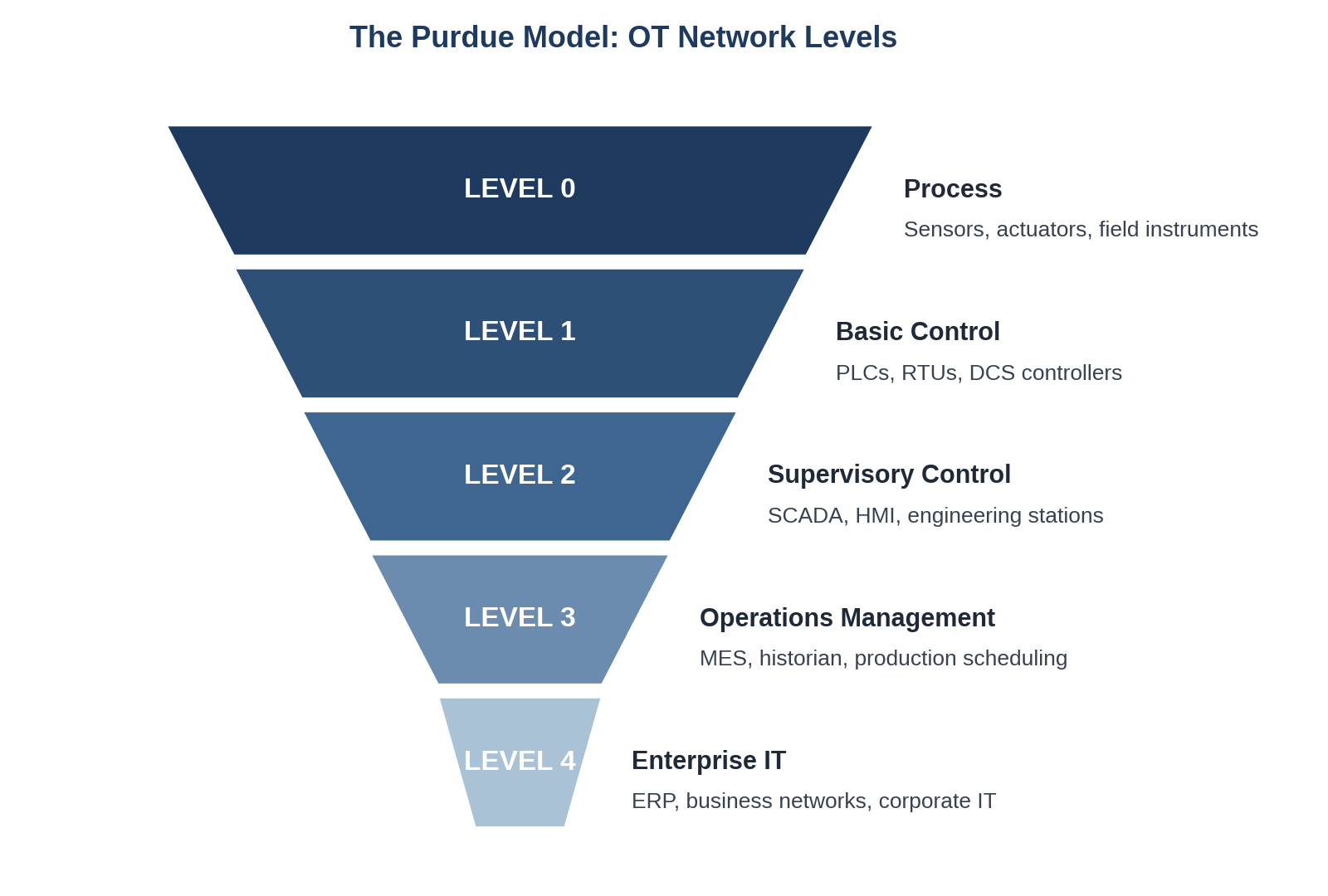
Table 1, The Purdue Model: OT Network Levels
| Level | Name | Systems and Devices |
|---|---|---|
| Level 4 | Enterprise IT | ERP systems, business networks, corporate IT infrastructure |
| Level 3 | Operations Management | MES, historian servers, production scheduling systems |
| Level 2 | Supervisory Control | SCADA systems, HMI workstations, and engineering stations |
| Level 1 | Basic Control | PLCs, RTUs, DCS controllers |
| Level 0 | Process | Sensors, actuators, field instruments, and physical machinery |
Each level communicates with the levels directly above and below it. Traffic between non-adjacent levels, particularly between Level 4 enterprise IT and Level 0 process equipment, should always pass through defined security boundaries. In practice, this separation is where most industrial networks fall short.
Formally known as the Purdue Enterprise Reference Architecture (PERA), the model was developed by Theodore J. Williams at Purdue University in 1992 and published under the ISA-95 standard. For over three decades, it has served as the primary reference architecture for engineers designing, auditing, and securing industrial OT network designs.
Its enduring relevance comes from one core principle: communication between non-adjacent levels should pass through defined, controlled boundaries. That principle remains the backbone of every serious OT network design and cybersecurity framework in use today, including IEC 62443. Modern implementations extend the model upward by adding an edge-to-cloud layer to support IIoT integration and cloud analytics, without abandoning the structural logic that made it indispensable in the first place.
How Industrial OT Networks Differ From IT Networks
The differences between IT and OT network design are not cosmetic. They are fundamental:
Table 2, IT Networks vs OT Networks: Key Differences
| Characteristic | IT Networks | OT Networks |
|---|---|---|
| Primary priority | Data confidentiality | System availability |
| Update tolerance | Regular patching accepted | Patching requires careful validation |
| Downtime tolerance | Minutes acceptable | Seconds critical |
| Device lifespan | 3 to 5 years | 15 to 25 years |
| Communication style | Bursty, asynchronous | Deterministic, time-sensitive |
| Security approach | CIA triad (Confidentiality first) | AIC triad (Availability first) |
| Environment | Climate controlled | Harsh, wide temperature ranges |
Understanding these differences is not academic. Every design decision in an industrial OT network, from switch selection to protocol choice to security architecture, flows from these fundamental distinctions. An IT engineer applying IT design principles to an OT environment without accounting for these differences will create a network that looks correct on paper and causes problems in the field.
What is the difference between IT and OT network architecture?
IT networks are designed around data confidentiality, flexibility, and user access. OT networks prioritize availability, determinism, and process safety above everything else. In an IT environment, a security patch can be pushed overnight with minimal disruption. In an OT environment, the same patch requires extensive validation because the devices it touches may be controlling a live production line, a power grid, or a water treatment facility. The architecture reflects those priorities at every layer, from the physical hardware to the communication protocols to the security boundaries between zones.
Core Components of OT Network Infrastructure
Every industrial OT network is built around a specific set of hardware and software components. Understanding what each one does and how they interact is the foundation of every design, upgrade, and troubleshooting decision that follows.
These are not abstract concepts. They are the physical and logical building blocks sitting inside every control cabinet, every substation, and every production facility operating right now.
Programmable Logic Controllers (PLCs)
The workhorse of industrial automation. A PLC is a ruggedized industrial computer that executes control logic in real time, reading inputs from sensors, processing them against a programmed set of conditions, and triggering outputs to actuators, motors, and other field devices. PLC communication happens in milliseconds. Modern PLCs support Ethernet connectivity natively, with many supporting multiple industrial protocols simultaneously. A mid-size manufacturing facility may run anywhere from a handful to several hundred PLCs simultaneously.
Remote Terminal Units (RTUs)
Where PLCs manage localized control logic, RTUs are designed for remote data acquisition and transmission across wide geographic areas. A water utility monitoring pump stations spread across hundreds of kilometers relies on RTUs to collect field data and transmit it back to a central SCADA network system. RTUs are built for low-bandwidth, long-distance communication, often over cellular or radio links in environments where fiber or Ethernet infrastructure does not exist.
Human Machine Interfaces (HMIs)
The visualization layer of the OT network. HMIs give operators real-time visibility into process conditions, displaying sensor readings, alarm states, and system status in a format that supports fast, informed decision-making. Modern HMIs run on industrial PCs with Ethernet connectivity, integrating directly into the broader industrial network infrastructure. Response time matters here; an operator acting on a two-second-old reading in a fast-moving process environment is effectively operating blind.
SCADA Systems
SCADA network systems sit at Level 2 of the Purdue Model, providing supervisory monitoring and control across entire facilities or geographic regions. A SCADA system collects data from PLCs, RTUs, and field instruments, presents it to operators through HMI screens, and enables remote control actions across the network. Modern SCADA platforms increasingly integrate with historian databases and analytics platforms, extending industrial data flow upward toward enterprise IT systems and cloud infrastructure.
Distributed Control Systems (DCS)
Where SCADA systems provide broad supervisory oversight, a DCS provides tightly integrated control across complex continuous processes, chemical plants, refineries, and power generation facilities. A DCS distributes control functions across multiple controllers rather than centralizing them, improving fault tolerance and reducing the risk of a single point of failure bringing down an entire process. DCS architectures typically operate with cycle times measured in milliseconds and communicate over dedicated real-time industrial communication networks.
Industrial IoT Devices and Sensors
The data generation layer of the modern OT network. IIoT devices, sensors, smart actuators, and condition monitoring systems generate the operational data that feeds analytics platforms, predictive maintenance systems, and process optimization algorithms. Balluff's industrial sensing portfolio, for example, provides precision position, proximity, and condition monitoring data directly into automation networks, capturing machine-level intelligence that was previously invisible to the broader system. A single modern production line may have hundreds of these devices generating continuous data streams.
Industrial Networking Hardware
The physical communication infrastructure that connects every component listed above. Industrial Ethernet switches, routers, media converters, wireless access points, and cellular gateways form the mission-critical network backbone that carries industrial data flow between every layer of the Purdue Model. This hardware operates in environments that would destroy commercial networking equipment: wide temperature ranges from -40°C to 75°C, high electromagnetic interference, vibration, and shock. The difference between industrial-grade and commercial-grade networking hardware is not a specification detail. It is an operational reality.
Power Infrastructure
Often overlooked in network architecture discussions, but responsible for more unplanned downtime than most engineers expect. Every network component requires stable, clean DC power. PULS DIN rail power supplies, for example, are engineered specifically for industrial control cabinet environments, providing redundant power modules and buffer systems that maintain network uptime during power fluctuations. An unstable power supply feeding a managed Ethernet switch in a substation is a network reliability problem, not just a power problem.
Table 3, OT Network Components: Function and Purdue Level
| Component | Primary Function | Purdue Level | Typical Communication |
|---|---|---|---|
| PLC | Real-time process control | Level 1 | Modbus, PROFINET, EtherNet/IP |
| RTU | Remote data acquisition | Level 1 | Modbus RTU, DNP3, IEC 60870 |
| HMI | Operator visualization | Level 2 | OPC UA, Modbus TCP |
| SCADA | Supervisory monitoring and control | Level 2 | OPC UA, DNP3, IEC 61850 |
| DCS | Continuous process control | Level 1–2 | Proprietary, PROFINET |
| IIoT Sensors | Data acquisition and monitoring | Level 0–1 | IO-Link, MQTT, OPC UA |
| Ethernet Switch | Network traffic management | All levels | IEEE 802.3 |
| Cellular Gateway | Remote connectivity | Level 1–2 | LTE, 5G, VPN |
| Power Supply | Stable DC power delivery | All levels | — |
Industrial Ethernet in OT Networks
Industrial Ethernet is the adaptation of standard IEEE 802.3 Ethernet to meet the determinism, durability, and reliability requirements of OT environments. It has effectively replaced serial communication as the dominant connectivity standard across critical industries, and adoption continues to accelerate as facilities modernize aging fieldbus infrastructure.
Serial communication, RS-232 and RS-485, served industrial networks reliably for decades but has hard limits: maximum distances of 1,200 meters, data rates in kilobits, and point-to-point topologies that do not scale. Industrial Ethernet removes those constraints entirely, operating at 100 Mbps to 1 Gbps, extending to 80 kilometers over single-mode fiber, and supporting complex network topologies across entire facilities and geographic regions.
Managed vs Unmanaged Industrial Ethernet Switches
Industrial Ethernet switches in OT networks come in three variants. Unmanaged switches offer plug-and-play simplicity for non-critical field-level connections. Managed Ethernet switches provide VLAN segmentation, QoS prioritization, redundancy protocol support, and full diagnostic visibility, essential for process control and supervisory network layers. For mission-critical networks, the choice between managed and unmanaged is an architecture decision, not a cost decision.
Network Redundancy: RSTP and MRP
Network redundancy in industrial Ethernet ensures that a single link failure does not interrupt operations. Two protocols dominate:
- RSTP, IEEE 802.1w standard, recovery under 200 milliseconds, appropriate for supervisory-level networks.
- MRP, IEC 62439-2 standard, recovery under 10 milliseconds, designed for industrial ring topologies and process control networks where RSTP's recovery window is operationally unacceptable.
Deterministic communication, guaranteed message delivery within a defined time window, is the requirement that separates industrial Ethernet from commercial networking. TSN extends determinism to standard Ethernet, enabling motion control and process data to share the same physical network without interference.
For a full comparison of RSTP, MRP, PRP, and HSR recovery times and use cases, see the network redundancy protocols section of our Industrial Ethernet guide.
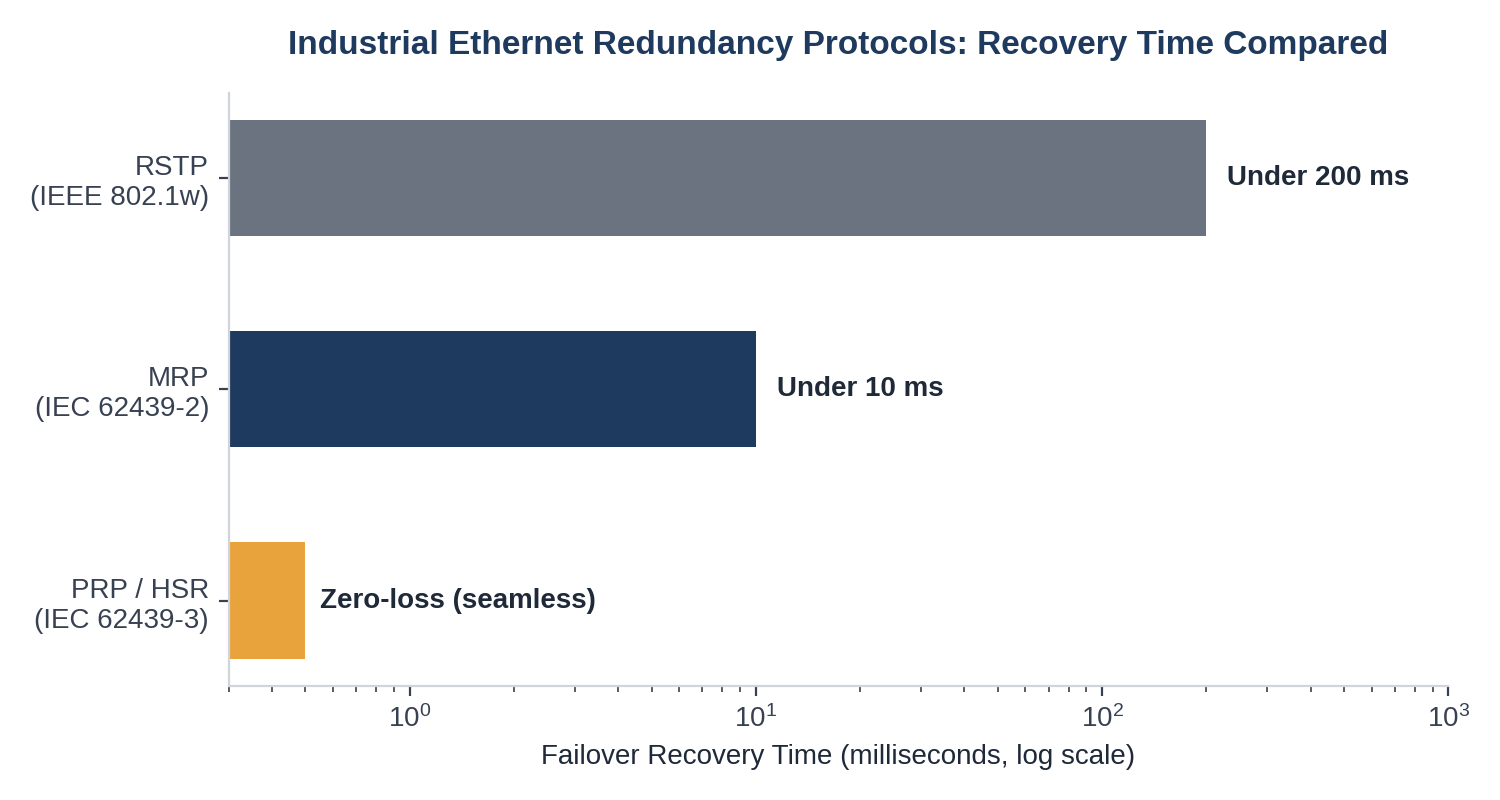
Table 4, Industrial Ethernet Redundancy Protocol Comparison
| Protocol | Standard | Topology | Recovery Time | Best Application |
|---|---|---|---|---|
| RSTP | IEEE 802.1w | Ring or mesh | Under 200ms | Supervisory level networks |
| MRP | IEC 62439-2 | Ring | Under 10ms | Process control networks |
| PRP | IEC 62439-3 | Parallel redundancy | Zero | Power utility, substation |
| HSR | IEC 62439-3 | Ring | Zero | IEC 61850 substation automation |
Industrial Ethernet covers far more than switch selection and redundancy: TSN, fiber vs. copper planning, PoE budgeting, and topology design all shape how a network performs under real load. The complete engineer's guide to Industrial Ethernet in OT Networks covers all of it in depth.
Industrial Communication Protocols in OT Networks
Every device on an industrial OT network speaks a language. The problem is that not all of them speak the same one. A PLC programmed in the 1990s communicates over Modbus RTU. A modern SCADA platform expects OPC UA. A new automation cell runs PROFINET. Getting these systems to exchange data reliably across decades of installed equipment, across vendors, and across protocol generations is one of the defining challenges of industrial OT network design.
Understanding industrial communication protocols is not optional for anyone responsible for designing, maintaining, or expanding an OT network. Protocol choice affects latency, bandwidth, security, scalability, and the long-term maintainability of the entire system.
The Industrial Protocol Landscape
Industrial communication protocols fall into two broad categories: fieldbus protocols and Ethernet-based protocols. Fieldbus protocols dominated industrial communication for decades before Ethernet became viable in harsh environments. Many are still in active use today, running on legacy equipment that has decades of operational life remaining.
Table 5, Industrial Communication Protocols
| Protocol | Type | Speed | Primary Use | Still in Active Use |
|---|---|---|---|---|
| Modbus RTU | Serial fieldbus | Up to 115 kbps | Legacy PLCs, sensors, meters | Yes, widely deployed |
| Modbus TCP | Ethernet | 100 Mbps+ | SCADA, HMI, modern PLCs | Yes, very widely deployed |
| PROFIBUS | Serial fieldbus | Up to 12 Mbps | Process and factory automation | Yes, large installed base |
| PROFINET | Ethernet | 100 Mbps+ | Factory automation, motion control | Yes, growing rapidly |
| EtherNet/IP | Ethernet | 100 Mbps+ | Discrete manufacturing, robotics | Yes, dominant in North America |
| OPC UA | Ethernet/software | Variable | IT/OT integration, IIoT, cloud | Yes, rapidly expanding |
| DNP3 | Serial/Ethernet | Variable | Utilities, water, oil and gas | Yes, critical infrastructure |
| IEC 61850 | Ethernet | 100 Mbps+ | Power substations, smart grid | Yes, power utility standard |
| MQTT | IP-based | Variable | IIoT, edge-to-cloud | Growing, IIoT standard |
Modbus RTU and Modbus TCP
Introduced in 1979, Modbus RTU is the most widely deployed industrial protocol in existence, still active in millions of field devices worldwide. Modbus TCP wraps the same protocol inside TCP/IP packets, making legacy Modbus RTU devices accessible over modern Ethernet infrastructure through serial device servers and protocol gateways. The transition between the two is one of the most common serial-to-Ethernet integration challenges in industrial networking today.
What is the difference between Modbus RTU and Modbus TCP, and when should each be used?
Modbus RTU operates over serial connections, RS-232 or RS-485, and is the right choice for legacy devices that were built before industrial Ethernet was viable. It is simple, robust, and still perfectly functional for low-bandwidth, point-to-point or limited multi-drop applications. Modbus TCP wraps the same protocol inside TCP/IP packets and runs over standard Ethernet infrastructure, making it compatible with modern SCADA systems, HMI platforms, and network management tools. When integrating legacy Modbus RTU devices into a modern Ethernet network, a serial device server or protocol gateway handles the conversion without requiring hardware replacement. The choice between them is rarely about preference. It is about what the existing infrastructure already supports.
PROFINET in Industrial Networks
PROFINET is the Ethernet evolution of PROFIBUS, dominant in European manufacturing and growing rapidly in North America. It supports three communication classes: standard TCP/IP for configuration, RT for cycle times as low as 1 millisecond, and IRT for motion control with jitter below 1 microsecond. For mixed protocol environments, protocol gateways handle bidirectional PROFINET-to-Modbus-TCP and EtherNet/IP conversion without replacing existing hardware.
OPC UA for IT/OT Integration
OPC UA is the emerging standard for industrial data flow between OT systems and IT or cloud platforms: platform independent, secure by design, and carrying semantic data context alongside raw values. The OPC UA installed base grew by approximately 40% between 2020 and 2023, based on the report by Future Market Insights Inc [3]. For real-time industrial communication between field-level PLCs and enterprise analytics platforms, OPC UA is increasingly the protocol of choice at every IT/OT integration boundary, including the edge gateways that normalize protocol data before it reaches the cloud.
What is the OPC Foundation, and what role does it play in industrial networking?
The OPC Foundation is a global non-profit consortium founded in 1996, responsible for developing the OPC family of open connectivity standards. With over 1,000 member companies and a global installed base exceeding 45 million devices, its flagship standard OPC UA, recognized as IEC 62541, has become the defining protocol for IT/OT convergence and industrial data flow between field devices and cloud platforms. Current initiatives extend OPC UA into field-level communication, cloud interoperability, and AI integration.
Legacy Industrial Communication
The average age of installed industrial control equipment in North America exceeds 15 years. Fieldbus communication systems, PROFIBUS, DNP3, DeviceNet, remain active across large installed bases. The practical path forward is not replacement. It is integration through serial-to-Ethernet converters, protocol gateways, and OPC UA servers, bridging legacy industrial communication infrastructure into contemporary platforms without disrupting operations.
Industrial Edge Computing in OT Networks
For most of industrial history, data flowed in one direction: upward. Field devices to PLCs. PLCs to SCADA. SCADA to historians. Everything centralized. That model made sense when field devices generated modest data volumes, and decisions could tolerate seconds of latency. For a significant portion of modern industrial operations, it no longer does.
Edge computing in industrial automation moves data processing closer to where data is generated: at the machine, on the floor, at the remote field site. A growing share of enterprise-generated data is now processed outside a traditional data center or cloud entirely, and in industrial environments that share is higher still, driven by latency reduction in OT networks, bandwidth costs, and the operational risk of cloud-dependent decision-making in mission-critical networks.
PLC to Cloud Architecture
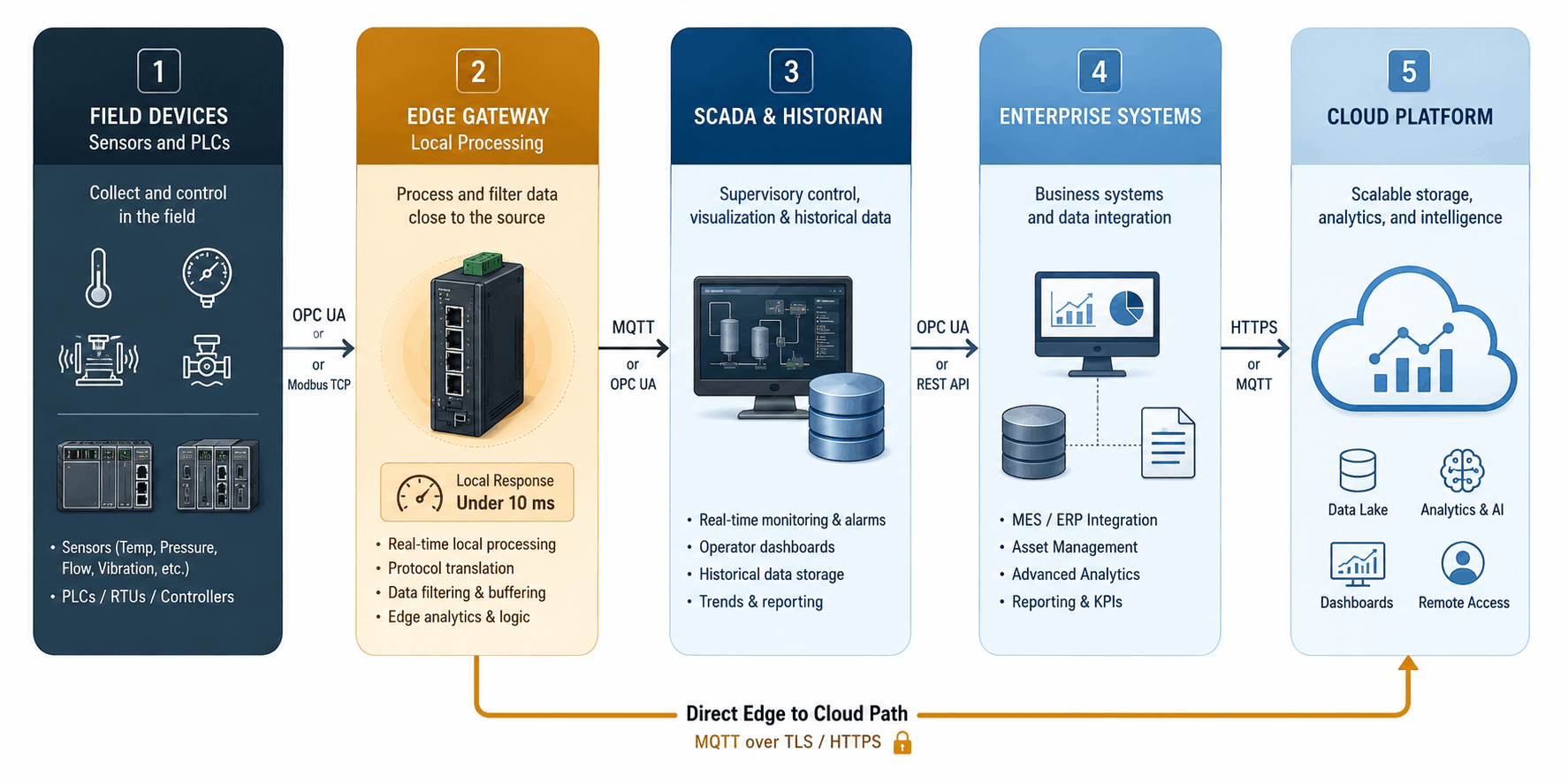
PLC-to-cloud architecture is the end-to-end pathway connecting physical process control at Level 0 to enterprise analytics and cloud platforms at Level 4 and above. Each transition point in that pathway is a potential bottleneck, a security boundary, and a failure point: the subject of our dedicated PLC-to-cloud architecture and edge gateway design guide.
Table 6 PLC to Cloud Data Flow
| Layer | Device/System | Function | Protocol |
|---|---|---|---|
| Field | Sensors, PLCs, RTUs | Data generation and control | Modbus RTU, PROFINET |
| Edge Gateway | IIoT gateway, edge computer | Protocol conversion, local processing | OPC UA, MQTT |
| SCADA/Historian | SCADA server, historian | Supervisory monitoring, storage | OPC UA, DNP3 |
| Enterprise | MES, ERP | Production management | REST API, OPC UA |
| Cloud | Cloud platform | Analytics, optimization | MQTT, HTTPS |
Why Edge Processing Changes the Equation
An edge computing device processing vibration data locally can trigger a predictive maintenance alert in under 10 milliseconds. Routing the same data to a cloud platform for analysis introduces round-trip latency of hundreds of milliseconds, which is operationally unacceptable for time-sensitive process decisions.
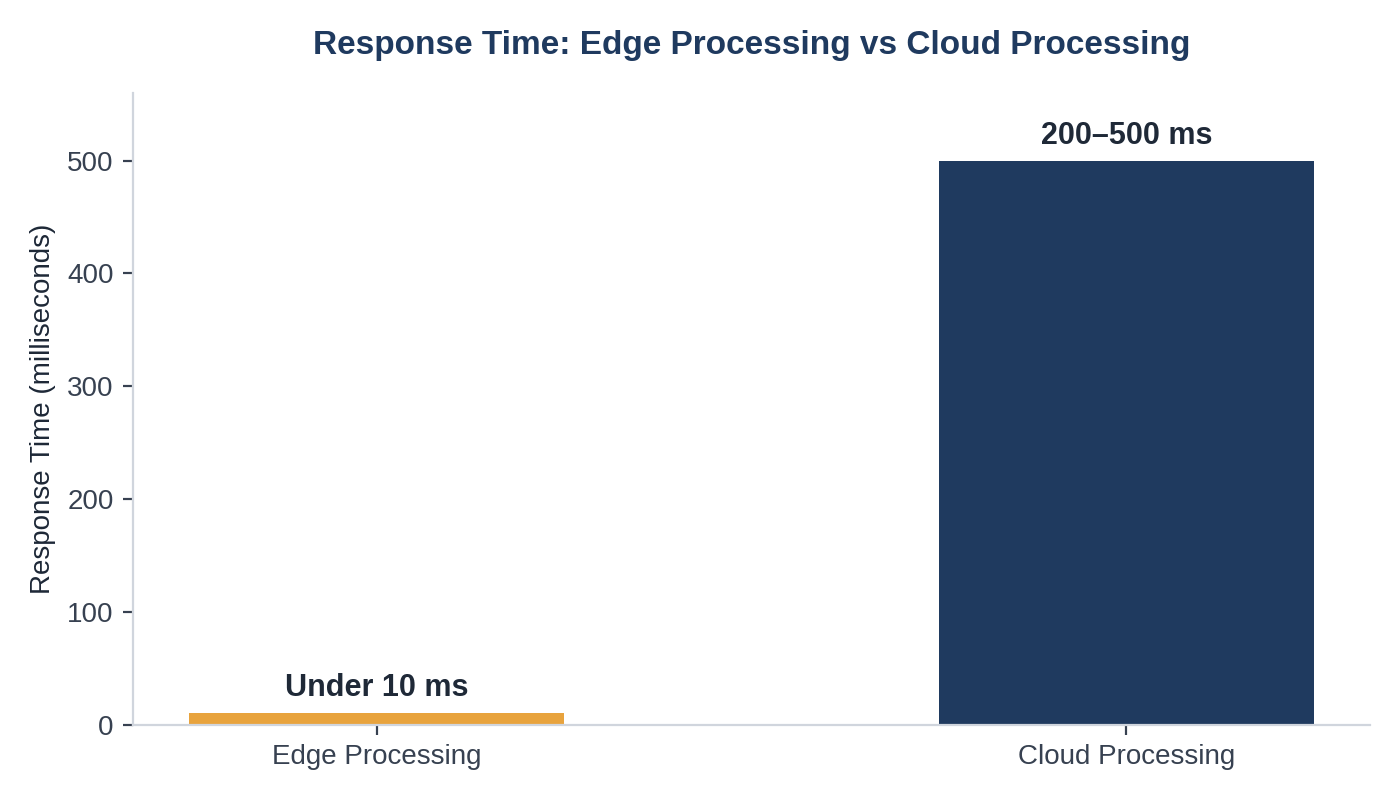
Real-time industrial analytics at the edge covers three primary use cases: predictive maintenance through condition monitoring, process optimization through real-time parameter analysis, and quality control through machine vision processing at the point of production. Each requires local real-time decision-making systems that cannot depend on WAN connectivity to function.
Scalable edge-to-cloud infrastructure allows deployments to grow, adding sites, devices, and data streams, without architectural redesign. The design principles are consistent edge hardware, protocol normalization at the gateway level, centralized remote management, and security at every layer from field device to cloud platform. Robustel's industrial edge computing gateways and Moxa's IIoT gateway portfolio both support this architecture, processing field data locally while forwarding actionable intelligence to centralized systems over secure, encrypted channels.
What is the difference between edge computing and cloud computing in industrial OT environments?
Cloud computing centralizes data processing and storage on remote servers: powerful, scalable, and appropriate for non-time-sensitive analytics, long-term data storage, and enterprise-level reporting. Edge computing processes data locally, at or near the source. It is essential for applications requiring sub-second response times, operations in locations with unreliable WAN connectivity, and use cases where transmitting raw data volumes to the cloud is bandwidth-prohibitive. In a well-designed industrial IoT architecture, both play defined roles: edge for real-time processing and local decision making, cloud for historical analytics, digital twin modeling, and cross-site optimization. The architecture question is not edge versus cloud. It is which processing belongs where.
For engineers and operators making decisions about PLC-to-cloud architecture, edge gateway selection, and real-time analytics deployment, the complete guide to Industrial Edge Computing in OT Networks goes deeper into gateway hardware, protocol normalization, and scalable edge-to-cloud design patterns.
OT Cybersecurity in Industrial Networks
Industrial networks were not designed with cybersecurity in mind. Physical isolation was the security model, and for decades, it worked. That isolation is gone. IT/OT convergence, remote access adoption, and IIoT connectivity have fundamentally expanded the industrial attack surface in ways that cannot be undone.
The consequences are documented across multiple well-known incidents: ransomware attacks have shut down major pipeline operations for days, and targeted attacks on power grid control systems have cut electricity to hundreds of thousands of customers at once. OT cybersecurity is no longer a future consideration. It is an active operational requirement.
IEC 62443 Is the Framework That Matters
IEC 62443 is the internationally recognized standard for industrial network security in OT environments. Unlike IT frameworks, IEC 62443 is built around availability first, because in cyber-physical systems security, an unavailable process control system is more dangerous than a compromised data record.
Its core architectural concept, zones and conduits, divides the OT network into segments with defined trust levels. Communication between zones passes through controlled conduits, enforcing strict protocol and access policies. This framework directly addresses lateral movement, the technique attackers use to reach OT systems from compromised IT entry points.
The Three Controls That Matter Most
- Network segmentation in industrial systems: VLANs and managed switches create logical boundaries between process control, supervisory, and enterprise traffic. They limit how far a threat can travel once inside the network.
- SCADA firewall protection: Using OT-aware deep packet inspection to inspect industrial protocol traffic at the function code level, blocking unauthorized write commands to PLCs while permitting legitimate read operations. Standard IT firewalls cannot do this.
- Secure remote access industrial architecture: VPN with multi-factor authentication, role-based access control, and session recording addresses the most common OT attack entry point without restricting legitimate operational access.
As Ethernet expands across industrial environments, network segmentation and cybersecurity controls become necessary to prevent unauthorized access. The complete guide to OT Cybersecurity in Industrial Networks walks through IEC 62443 zone design, SCADA firewall deployment, and secure remote access architecture in full.
Table 7, OT Cybersecurity Priority Controls
| Control | Priority | Primary Threat Addressed |
|---|---|---|
| Security zones and conduits | Critical | Unauthorized cross-zone access |
| Network segmentation | Critical | Lateral movement |
| Secure remote access | Critical | Remote exploitation |
| SCADA firewall protection | High | Supervisory system compromise |
| OT-specific monitoring | High | Anomaly detection |
| Asset inventory | Foundation | Visibility across all connected devices |
Industrial Network Architecture Requirements by Industry
Across every sector on this list, the network is the last line of defense before a failure becomes a crisis. The standards differ, the environments differ, and the consequences differ, but the requirement for reliable, secure, and deterministic communication does not.
Table 8, Industrial Network Architecture Requirements by Industry
| Industry | Dominant Operational Constraint | Cost of Network Failure | Architecture Priority |
|---|---|---|---|
| Manufacturing and Smart Factories | Continuous production cycle time | Millions of dollars per hour of downtime | Deterministic motion control, redundancy |
| Energy and Power Utilities | Grid protection response window | Regional outage, regulatory penalty | Sub-millisecond failover (PRP/HSR) |
| Oil, Gas, and Mining | Remote, hazardous, unmanned sites | Environmental release, safety incident | Explosion-rated hardware, WAN resilience |
| Transportation and Railway | Safety-critical signaling over distance | Service-wide disruption, safety risk | Long-haul deterministic communication |
| Water and Wastewater | Widely distributed, under-resourced sites | Public health and contamination risk | Remote monitoring, cybersecurity hardening |
| Marine and Ports | Saltwater, vibration, extreme temperature | Vessel or cargo-handling downtime | Certified ruggedized hardware |
| Smart Cities and Industrial IoT | City-scale device density | Cascading multi-system disruption | Scalable, segmented network architecture |
Industrial Network Solutions Available Through Manuauto
Understanding industrial network architecture in OT systems is one thing; having the right hardware to implement it is another. The products listed here are not a catalogue. They are the specific solution categories that address the architecture challenges covered in this guide, available through Manuauto across Canada with local engineering support, fast distribution, and a price match guarantee.

Industrial Ethernet Switching and Routing
The backbone of every OT network layer. Managed and unmanaged industrial Ethernet switches for deterministic traffic control, VLAN segmentation, and redundant ring topologies. Secure industrial routers for IT/OT boundary protection and encrypted WAN connectivity.
Relevant brands: Moxa

Protocol Gateways and Serial Connectivity
Bridging legacy fieldbus infrastructure and modern Ethernet networks. Serial device servers, protocol gateways, and media converters that extend the operational life of existing field equipment without replacing it.
Relevant brands: Moxa

Industrial Edge Computing and IIoT Gateways
Local data processing, protocol conversion, and secure edge-to-cloud forwarding for real-time industrial analytics and predictive maintenance applications across distributed industrial sites.
Relevant brands: Robustel

Cellular and Wireless Connectivity
Remote SCADA connectivity, secure remote access, and long-range wireless backhaul for sites where fixed-line infrastructure is unavailable or impractical.
color: rgb(0, 0, 0); padding: 2px 4px; border-radius: 3px; text-decoration: none; transition: 0.3s;">Robustel, Proxim
Industrial Sensing and Machine-Level Data Acquisition
Precision sensors, RFID systems, and condition monitoring devices that generate the machine-level data feeding industrial IoT architecture and predictive maintenance platforms.
Relevant brands: Balluff

OT Cybersecurity and Network Security Appliances
Protocol-aware firewalls, VPN routers, and network security appliances implementing IEC 62443 industrial security zones and conduits, purpose-built for OT environments where availability cannot be compromised.
Relevant brands: Moxa

Industrial Power Infrastructure
Stable, redundant DC power delivery for control cabinets and network hardware, because an unstable power supply feeding a managed switch is a network reliability problem, not just a power problem.
Relevant brands: PULS, Weidmüller

Signal and Operational Awareness Systems
Machine status indication and visual alert systems that keep operators informed in real time, closing the loop between network-connected automation systems and the people responsible for running them.
Relevant brands: Patlite
Frequently Asked Questions
What is industrial network architecture in OT systems, and why does it matter?
Industrial network architecture in OT systems is the structured design of communication infrastructure connecting field devices, control systems, and supervisory platforms. OT networks prioritize availability and determinism above everything else, because a network failure in a production facility or a power substation is not an inconvenience. It is an operational crisis.
What is the Purdue Model, and is it still relevant?
The Purdue Model organizes OT and IT systems into five levels, from physical process equipment at Level 0 to enterprise IT at Level 4. Developed in the 1990s, it remains the foundational reference for industrial OT network design. Modern implementations extend it upward with an edge layer and cloud tier to accommodate IIoT and edge-to-cloud architecture.
How do managed and unmanaged industrial Ethernet switches differ?
Unmanaged industrial Ethernet switches are plug-and-play, no configuration, no complexity, appropriate for non-critical field-level connections. Managed switches add VLAN segmentation, QoS, redundancy protocol support, and full diagnostics. For mission-critical networks at the process control and supervisory layers, managed switches are an architectural requirement, not an upgrade option.
What industrial communication protocols are most widely used in OT networks today?
Modbus TCP and Modbus RTU remain the most widely deployed globally. PROFINET dominates European factory automation. EtherNet/IP leads North American discrete manufacturing. OPC UA is the emerging standard for IT/OT integration and IIoT connectivity. Legacy fieldbus communication systems, PROFIBUS and DNP3, remain active across large installed bases, integrated through protocol gateways.
What is IT/OT convergence, and what are the security implications?
IT/OT convergence integrates enterprise IT systems with operational technology, delivering better data visibility, remote management, and process optimization. The security implication is that OT systems previously protected by physical isolation are now network-accessible. Every integration pathway is a potential attack vector requiring IEC 62443 industrial security architecture and secure remote access industrial design.
How does edge computing improve industrial OT network performance?
Edge computing in industrial automation moves processing to the field level, reducing latency from hundreds of milliseconds to under 10 milliseconds for time-sensitive applications. It also reduces bandwidth consumption and maintains operational continuity during WAN interruptions. For predictive maintenance and real-time industrial analytics, local edge processing is an architectural requirement, not an optimization.
What is IEC 62443, and which industries require compliance?
IEC 62443 is the international cybersecurity standard for industrial automation and control systems, defining security levels, zones, and conduit architecture. Compliance is required or strongly recommended across energy, oil and gas, water infrastructure, and transportation. Beyond regulation, it provides the most practical framework for designing defensible industrial network security in OT environments.
Build a Stronger Industrial Network: Start With the Right Partner
The architecture principles in this guide do not implement themselves. Every segmentation decision, every protocol choice, every redundancy design, and every cybersecurity control requires hardware that performs under real industrial conditions and engineering knowledge to specify, deploy, and support it correctly.
Manuauto works with industrial operators, system integrators, and engineering teams across Canada to translate architecture requirements into working solutions, from a single managed switch to a full industrial network infrastructure deployment across multiple sites.
What Manuauto brings to every project:
- Authorized distribution of proven industrial networking brands across Canada
- Pre-sales engineering consultation, specifying the right solution before the order is placed
- Fast distribution and local support, no timezone delays, no generic ticket queues
- Price match guarantee on every order
- Post-deployment support from the same team that helped design the solution