
New Blog Post

Modern mines run on data. From autonomous haul trucks to AI-driven analytics and industrial IoT sensors, everything depends on one thing: a network that does not drop out. The challenge grows with every connected asset, because mobile equipment keeps moving, underground conditions are harsh, and many sites stay in operation for decades. A resilient mining network infrastructure, built with Moxa industrial networking solutions, starts with the six priorities below.
Six Priorities for a Resilient Mining Network


Where Resilient Connectivity Powers Mining Operations
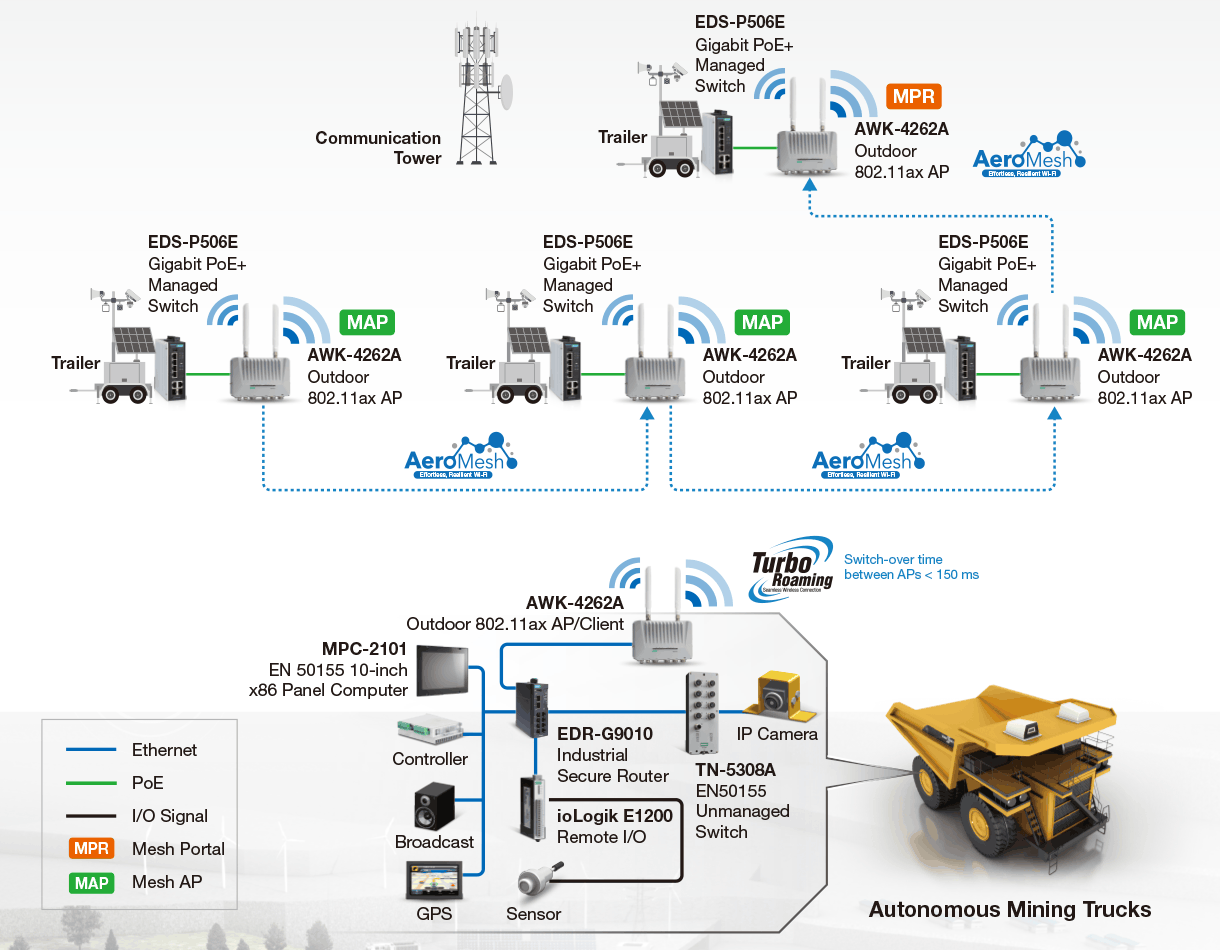
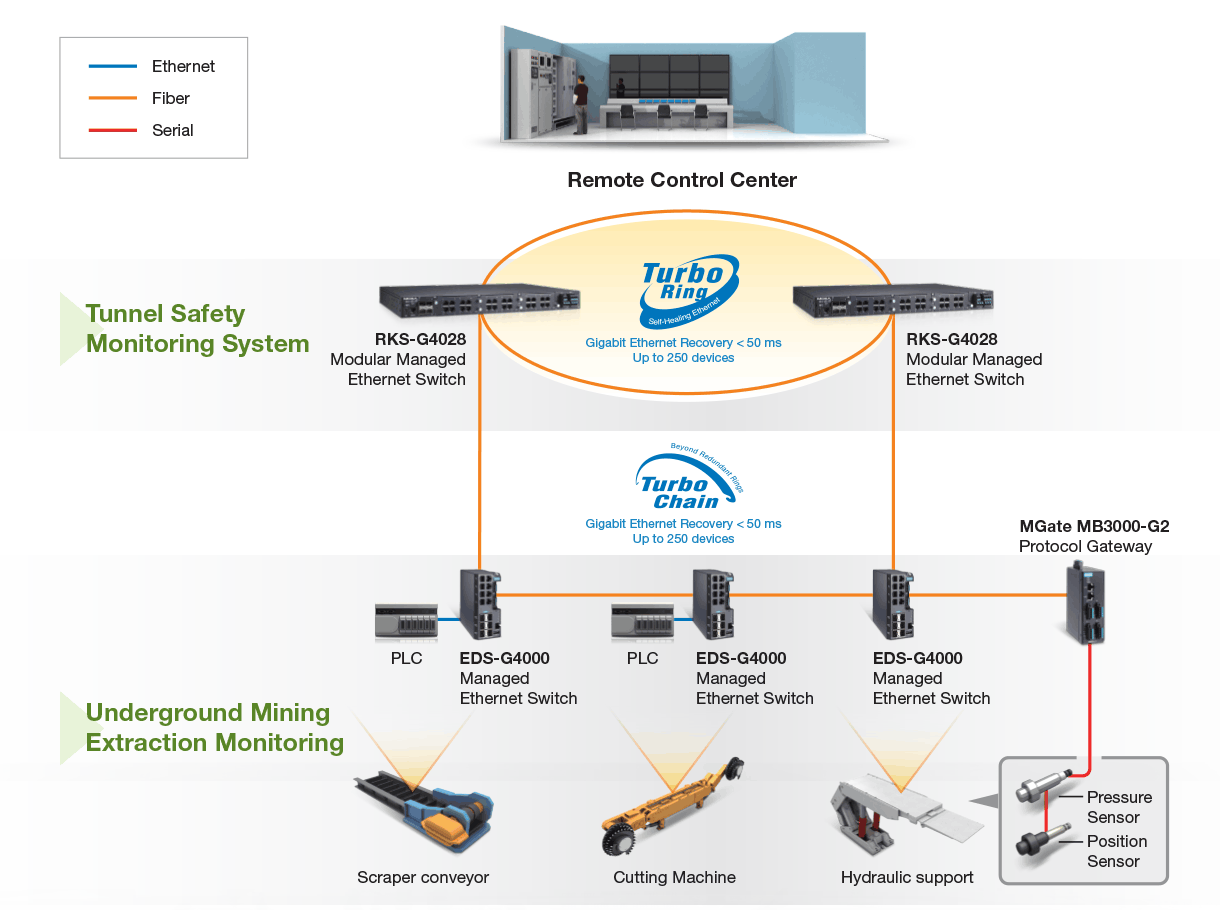
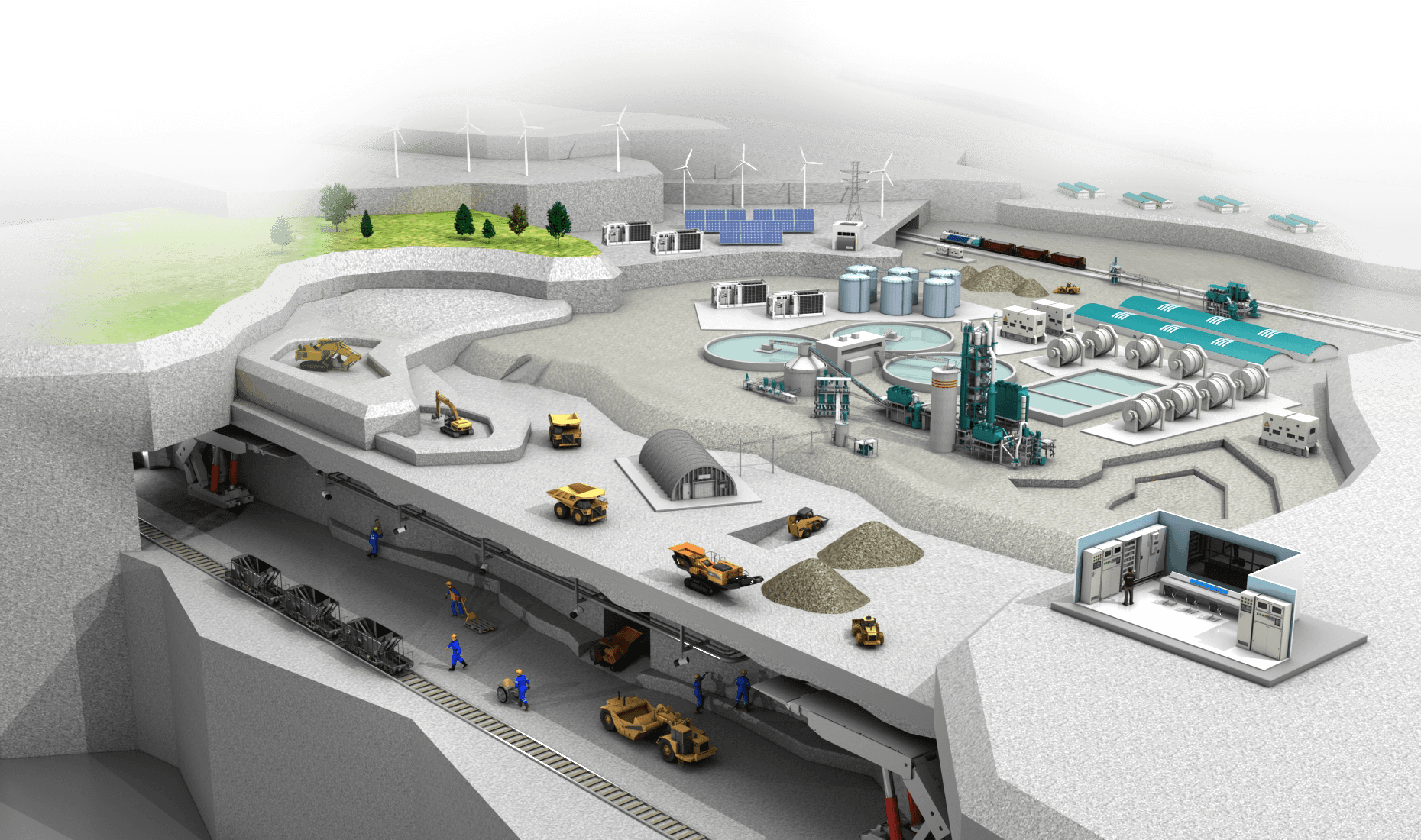
Mining automation is only as reliable as the network beneath it. Backed by 37+ years in edge connectivity, industrial computing and network infrastructure, Moxa hardware is already proven at mine sites across the globe. Common use cases range from autonomous vehicles and fleet management to underground extraction, environmental monitoring, process control and hybrid power management for renewables and battery energy storage systems (BESS). Select markers 1 and 2 on the map to open the network diagrams.
 Autonomous
Vehicle and Fleet Management
 Robust
Backbone Network for Underground Extraction and Environment Monitoring
Swipe left / right to explore the map



Why Mines Choose Moxa:
Technology Built to Keep Networks Running
Network Availability
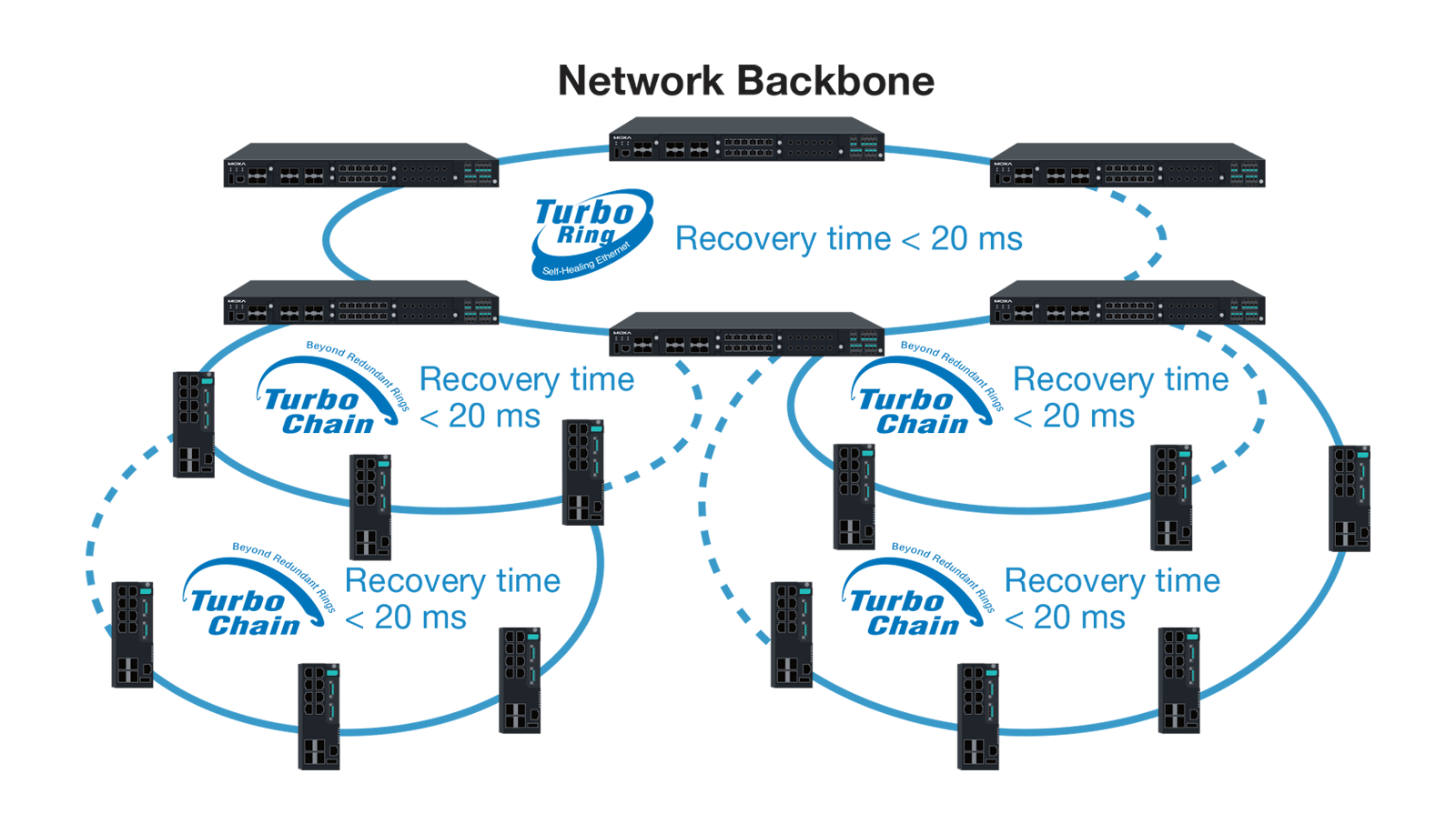
Turbo Ring and Turbo Chain keep automation online by recovering from a link failure in 20 ms, with multicast handling for up to 250 devices and room to grow as your layout changes.
(*Note: Recovery time for 10G/1G Ethernet is < 50 ms)
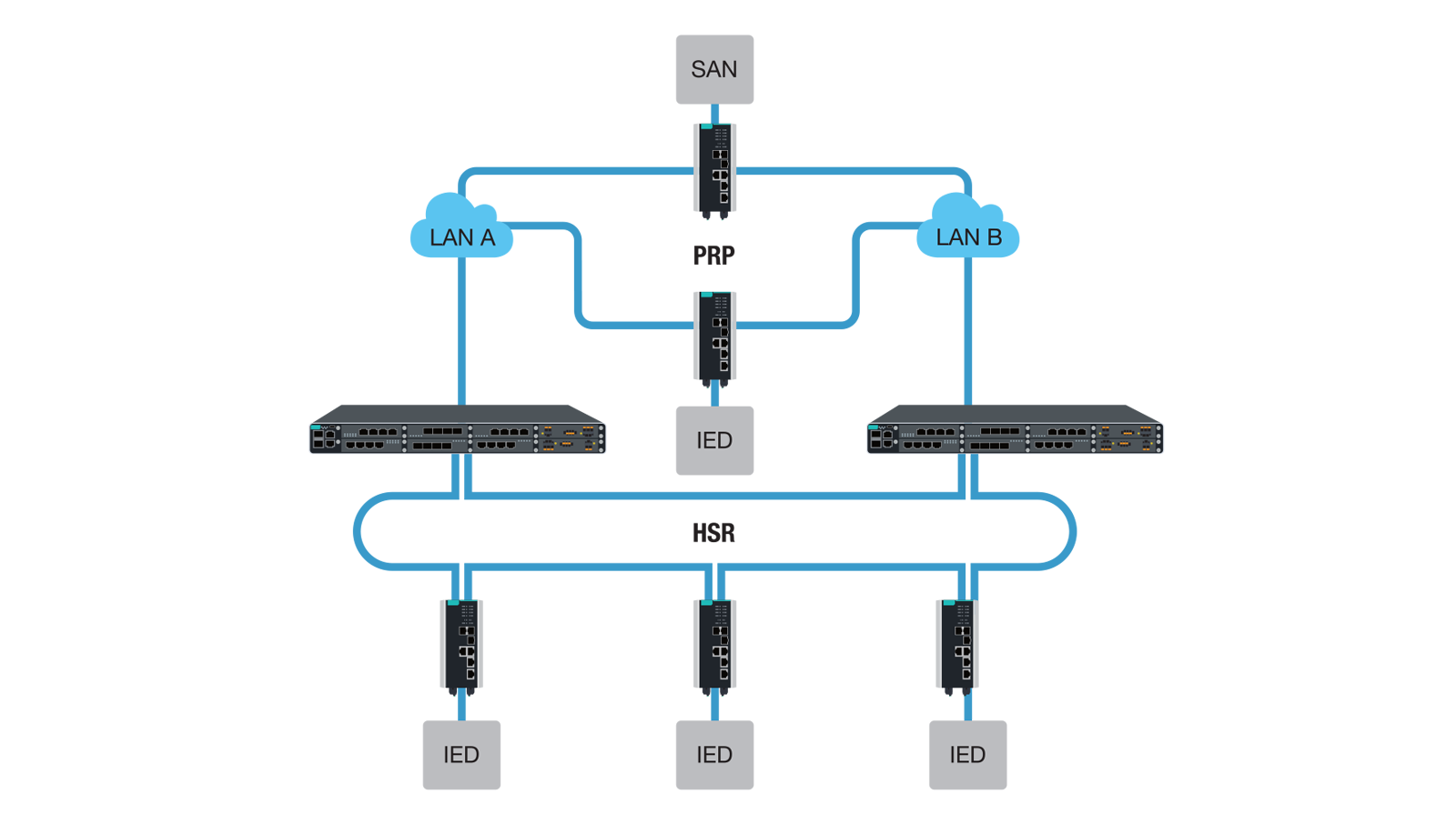
For zero-loss requirements, PRP and HSR (IEC 62439-3) duplicate every packet across two paths, so a single failure costs you no packets and no recovery time.


Wireless Network Reliability
Self-organizing Industrial Wi-Fi Mesh
AeroMesh builds and tunes the wireless mesh on its own, so you deploy faster with less cabling. When a portal or node goes down, traffic is rerouted automatically, keeping latency low for live 4K video, remote monitoring and driverless operation. See also our guide to Moxa industrial Wi-Fi 6 solutions.
- Self-forming Architecture: Wi-Fi backhaul links form automatically, with no extra controller.
- Self-healing Redundancy: Multiple mesh portal (MPR) redundancy restores the backhaul in < 2.5 seconds on average within 15 hops.
Note: The < 2.5 seconds average within 15 hops comes from tests under optimal conditions; real-world latency varies with the environment.
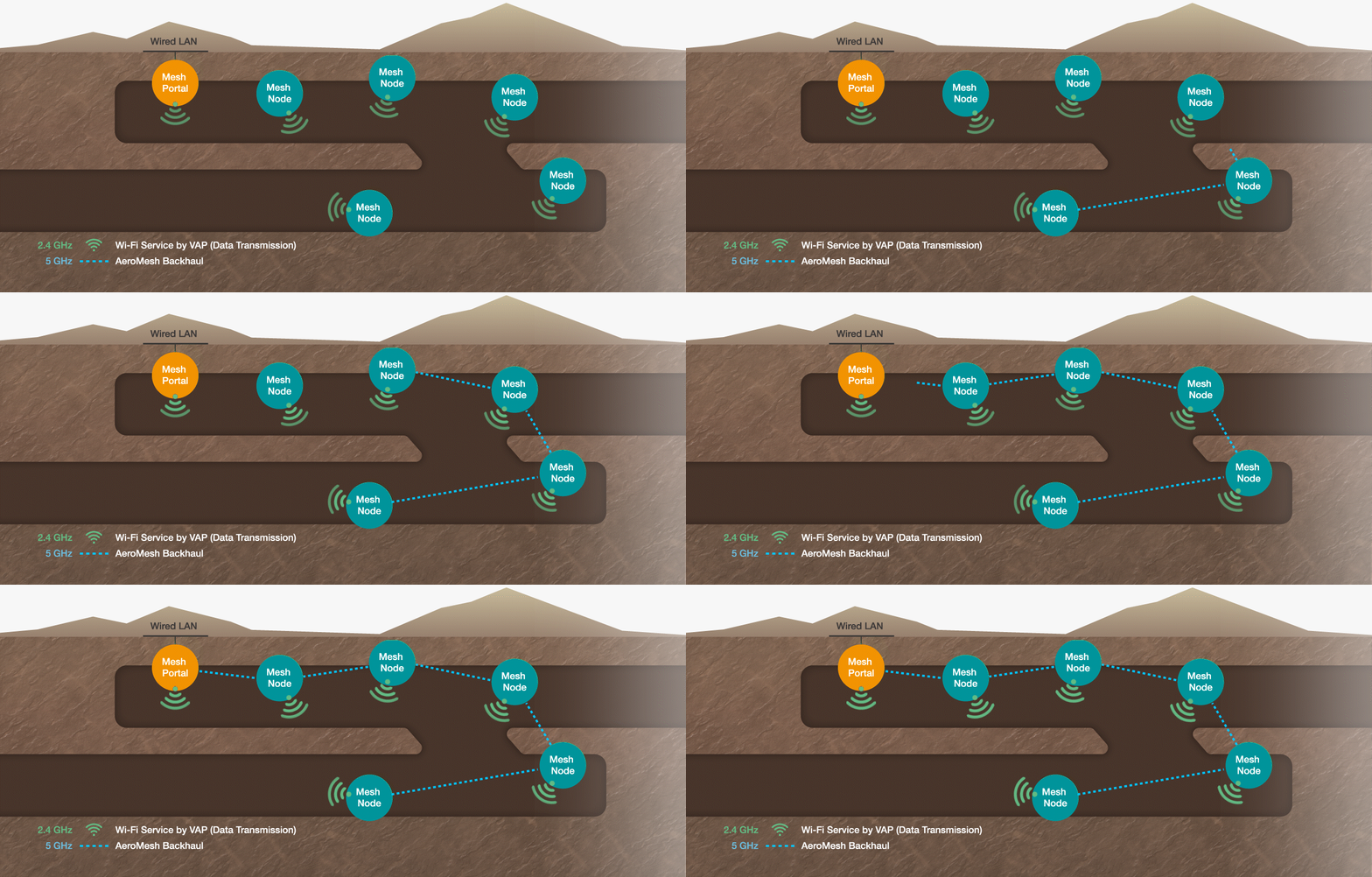
How the mesh forms itself with low latency
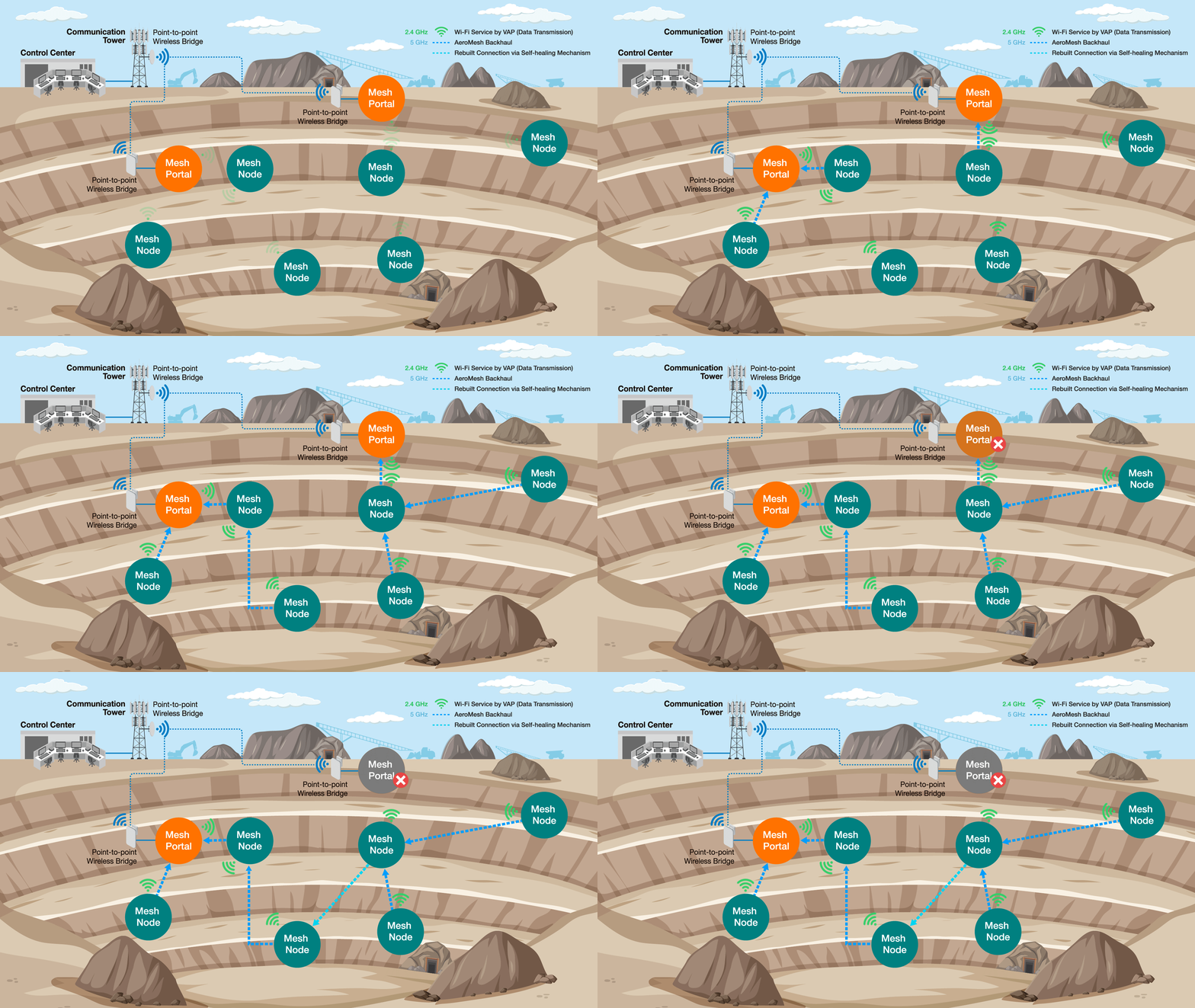
How multi-MPR redundancy keeps links always on

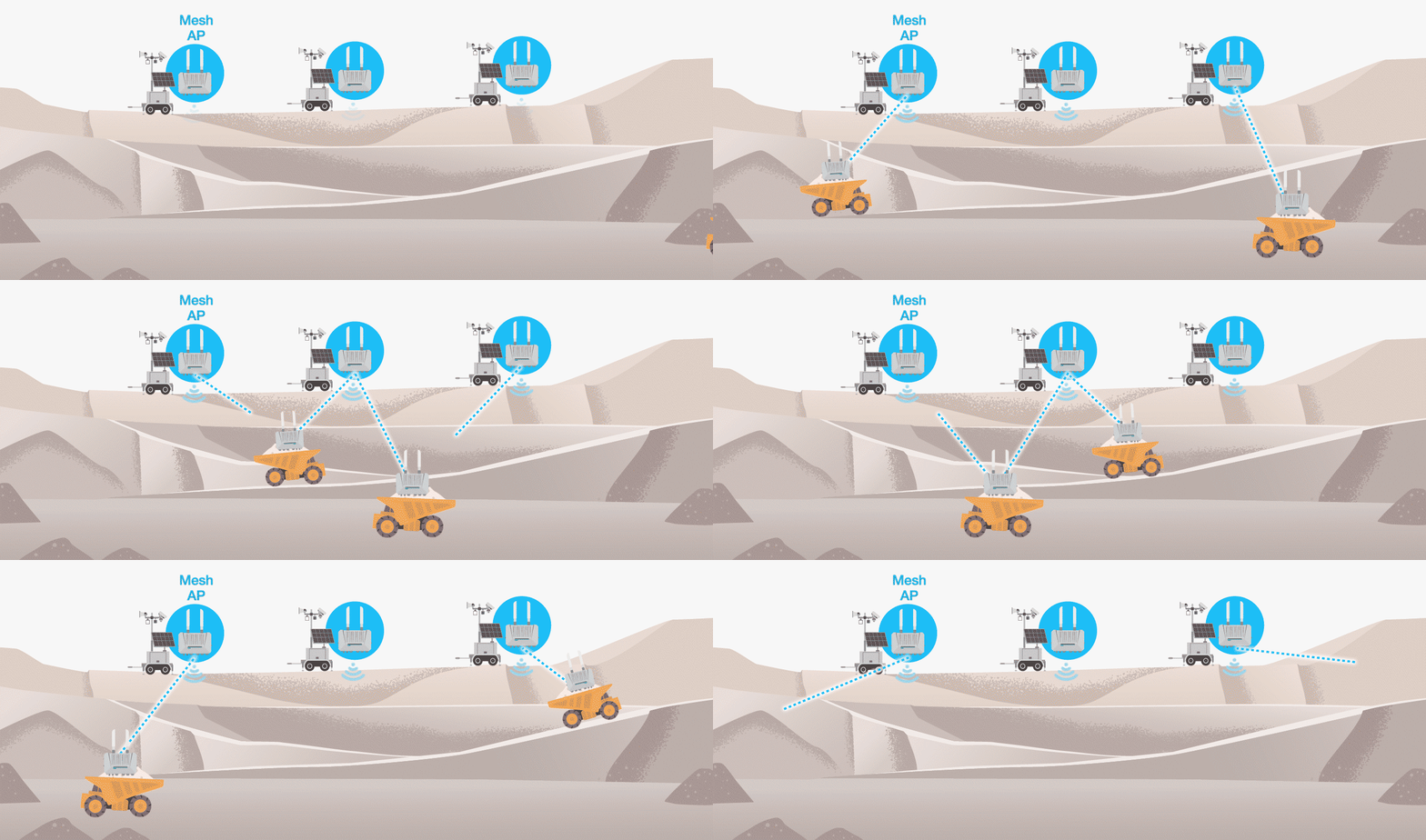
Fast Client-based Roaming for Moving Equipment
- Turbo Roaming hands over between APs in < 150 ms.
- Roaming parameters can be tuned to each environment.
- Client-based, so roaming does not depend on the APs.
Note: Turbo Roaming V2.0, coming in 2027, will cut handover time to below 50 ms for even smoother wireless connectivity.
Network Security
Defend OT networks with products aligned to IEC 62443-4-2.

Real-time Visibility
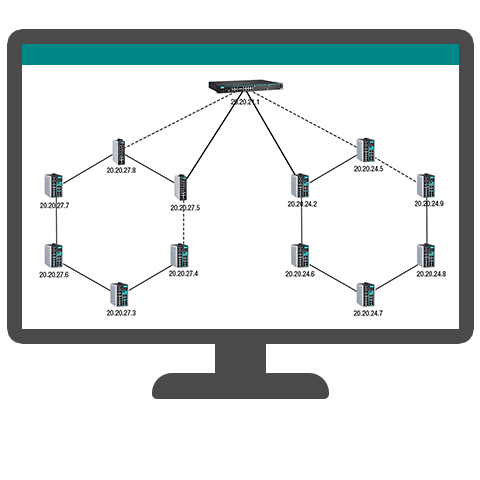
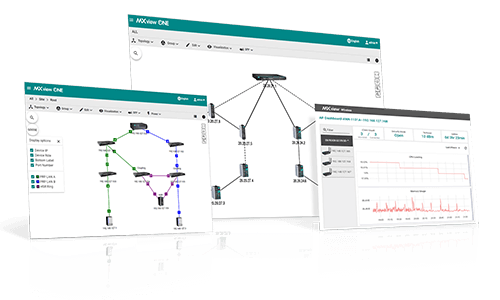
Monitor your network live with Moxa network management software to cut risk and speed up maintenance.
End-to-End Solutions
One source for connectivity, communication and computing, on rugged hardware built to run nonstop.

Industry Recognition
Trusted since 1987 and deployed at 300+ mine sites around the world.

Best-in-Class Support
Application consulting, proof of concept (PoC), troubleshooting and skills training, with driver and OS updates over the long term.
Moxa Products for Mining Networks
Ethernet Switches / PoE Switches
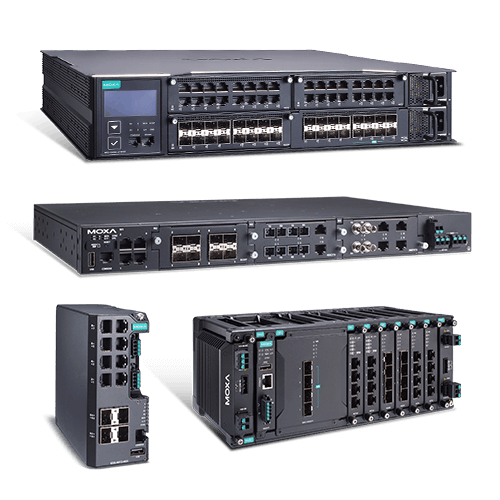
Rackmount/Modular/
DIN-rail Switches
RKS-G4028MDS-G4000
EDS-4000/G4000
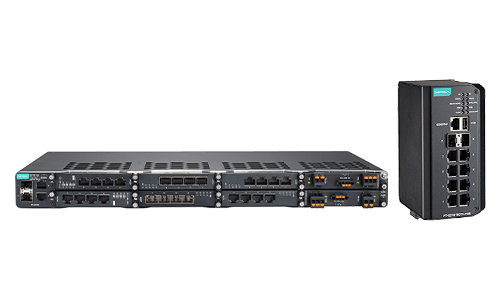
10GbE High-bandwidth Switches
RKS-G4000-PLMDS-G4000-L3-4XGS
MRX-G4064/Q4064
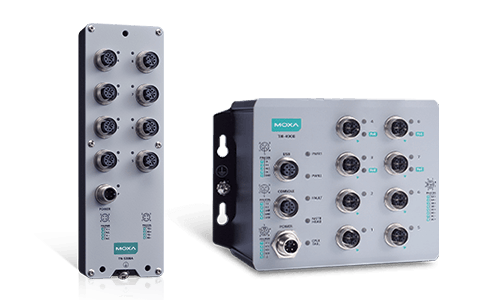
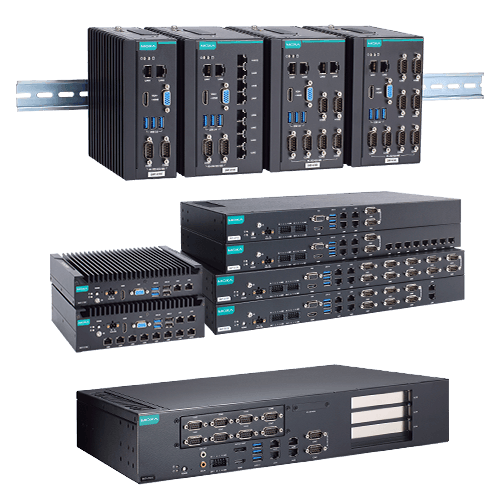
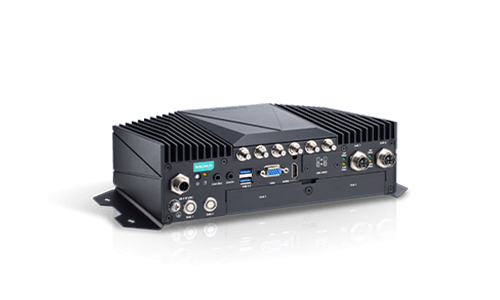
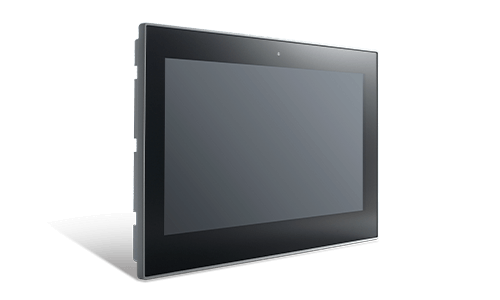
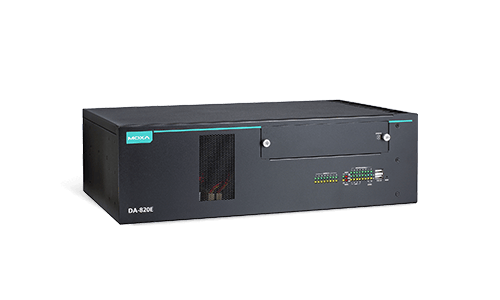
Industrial Computers
Industrial Wireless
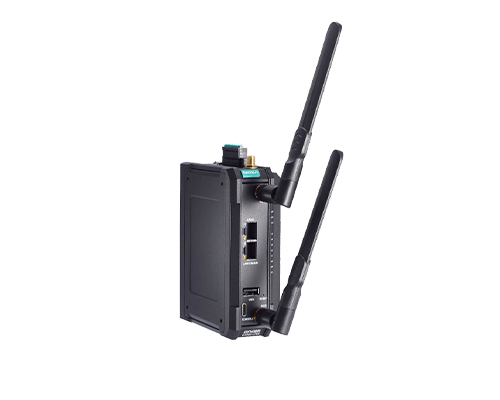
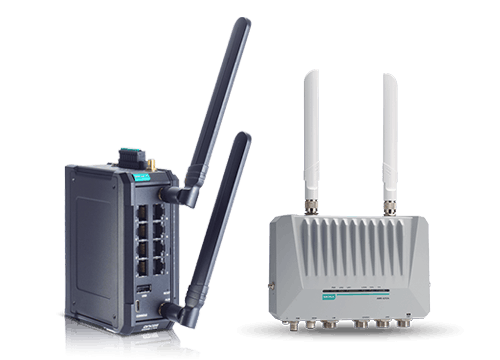
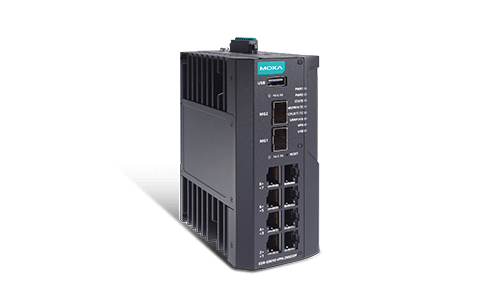
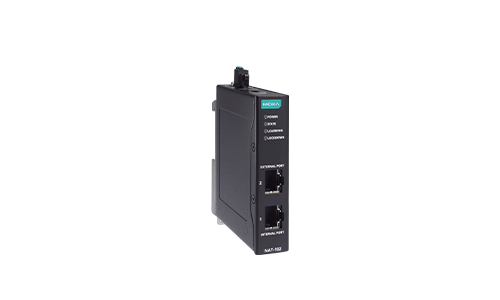
Secure Routers
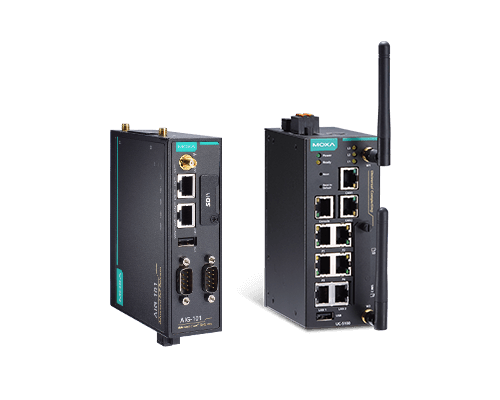
Industrial IoT Gateways
Network Management
-
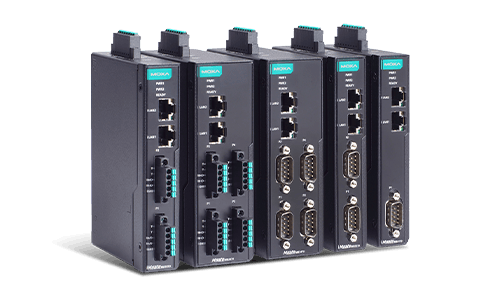
Protocol Gateways
-
Remote I/O
-
IP Cameras
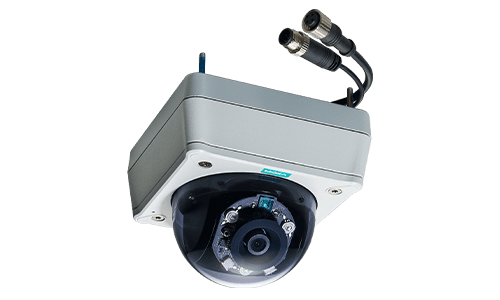
EN 50155 Certified
VPort Series
Related Products


